


Do Forehead Lines Give You a Tired Look?
Highlights
- Forehead lines are caused by muscle movement leaving permanent marks over time.
- Forehead Botox is often scheduled in conjunction with treatment between the eyebrows (glabella).
- Evaluating the two regions together yields a more balanced result.
- The article discusses how the method is applied and its impact on expression.
Forehead Botox Say Goodbye to Wrinkles
Our face is like a canvas that reflects our emotions and character, and the largest and most striking area of this canvas is undoubtedly our forehead. Our forehead muscles, which contract when we are surprised, anxious or concentrated, cause horizontal lines to form on the skin over time. These dynamic lines, which initially appear only when we make facial expressions, become permanent over the years as the skin loses its elasticity and they appear on our face even at rest.
The most bothersome aspect of forehead lines isn’t their depth, but the expression they give the face. As horizontal lines become more pronounced, a person may appear constantly tired, anxious, or tense—even when they’re well-rested. Most of my clients don’t come to the clinic saying, “I have wrinkles,” but rather, “I always look like I’m frowning.”.
As Dr. Melis Ulger Istanbul, Kadikoy’In this article from my clinic, I explain the connection between wrinkles and facial expressions: why the frontalis muscle is constantly active, how wrinkles alter facial expressions, and at what point intervention makes sense. For the procedure itself, dosage balance, and pricing, Get Botox You can check my guide.
Why Do Forehead Lines Occur and How Do They Affect Our Expression?
The main muscle responsible for the formation of the horizontal lines on our forehead is the “frontalis” muscle. This broad and flat muscle allows us to raise our eyebrows. Each time we lift our eyebrows, the frontalis muscle contracts and contracts the skin above it like an accordion. At a young age, our skin is supple thanks to high levels of collagen and elastin, and when the muscle relaxes, it immediately returns to its smooth state. However, with age and sun damage, our skin loses this ability to “bounce back”. Each contraction leaves a small mark on the skin, and over time, these marks deepen and turn into permanent static wrinkles. These lines are not only an aesthetic concern, but also play a role in our social communication. A constantly anxious or tense expression can give us the wrong impression on others.
What Is Forehead Botox and How Exactly Does It Work?
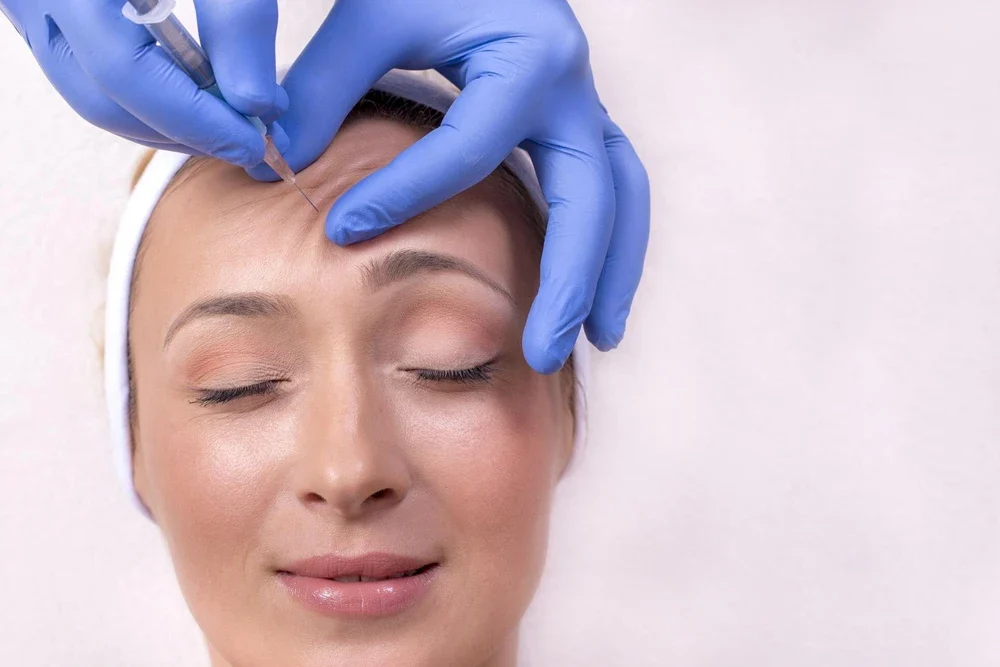
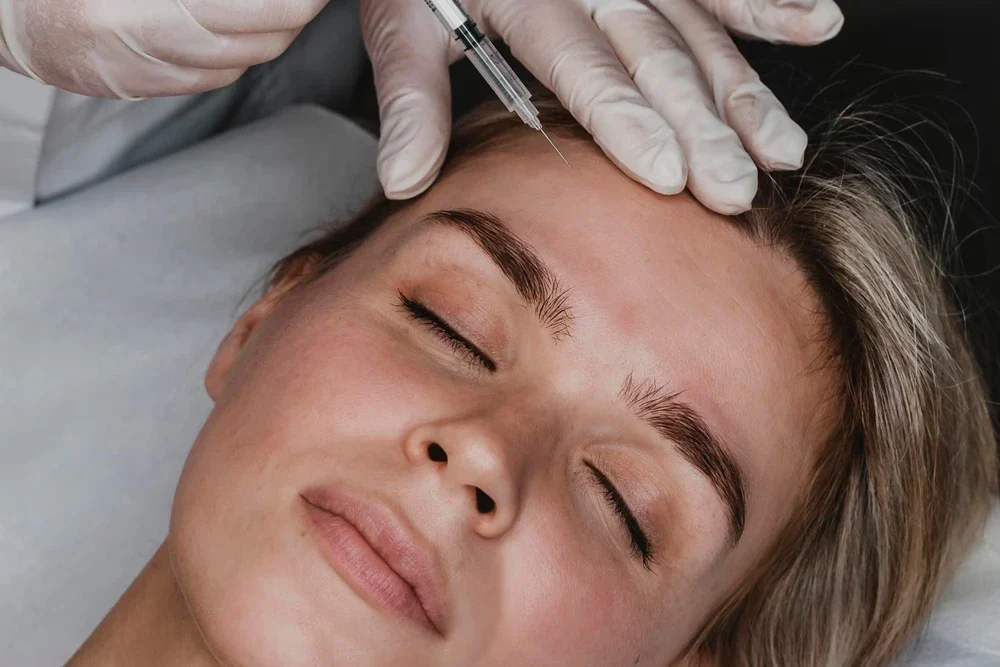
Forehead Botox is basically Botox is the process of injecting the drug, Botulinum toxin protein, into certain points of the frontalis muscle with very fine needles. The injected Botox temporarily blocks the communication between the muscle and the nerve. In this way, the nerve impulses that command the muscle to “contract” are reduced for a while. As a result, the overworked frontalis muscle relaxes and goes into rest mode. When the muscle relaxes, the skin above it is prevented from continuously contracting and the existing horizontal lines soften noticeably, even the fine ones may disappear completely. During this rest period, the skin has the opportunity to repair and smooth itself. The aim is not to completely paralyze the muscle, but to control its overactivity, creating a calmer and smoother forehead surface.
"Fear of "Dull Face": Why the Right Technique Matters for a Natural Result
The biggest concern with forehead botox is the excessive and artificial lifting of the eyebrows, known as “Spock's Brow” or vice versa, “heavy, drooping eyebrows” (brow ptosis) and a dull expression. The responsibility for these undesirable results lies entirely with the practitioner's technique, dosage and knowledge of anatomy, not the Botox drug itself. The frontalis muscle is the only muscle that raises the eyebrows. Applying botox to this muscle in excessive doses or at the wrong points can cause excessive relaxation of the muscle and cause the eyebrows to fall. On the contrary, relaxing only the middle part of the muscle and leaving the edges free leads to a “Spock” appearance.
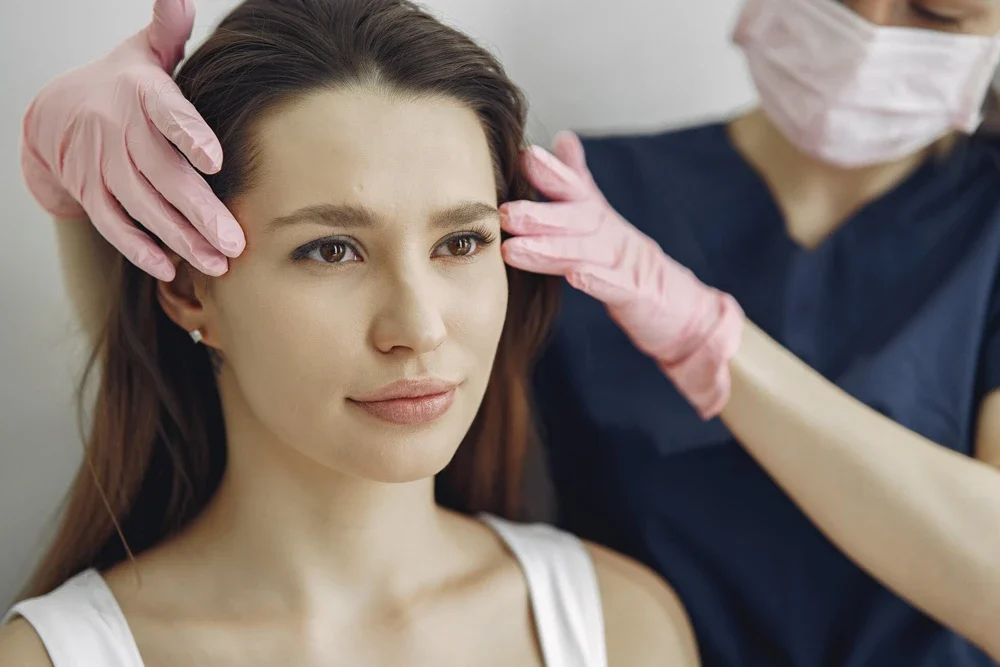
An expert physician knows that each patient's muscle structure and mimic habits are different. Kadikoy‘At our clinic in Istanbul, Turkey, I create your personal muscle map by asking you to talk and make facial expressions before starting the treatment. My goal is to create a completely customized injection plan that gives your eyebrows a natural arch, opens your gaze and preserves your expression. With the right technique, you can have a smooth forehead and still move your eyebrows naturally.
Let's Create Your Appointment Now
Leave your name and phone number and we will call you to discuss the right treatment and an appointment time.
Reach us by phone+90 532 336 52 00Synergy Between Forehead Botox and Botox Between the Eyebrows (Glabella)
Aesthetic balance in the forehead region is not limited to the frontalis muscle, which lifts the eyebrows. The “glabella complex”—located between the eyebrows and responsible for pulling the eyebrows downward and inward—is also a crucial part of this equation. Injecting Botox only into the frontalis muscle on the forehead while leaving the powerful downward-pulling muscles between the eyebrows untreated can disrupt this muscular balance. This situation can lead to a sensation of heaviness in the eyebrows or unwanted facial expressions, even though the forehead may appear relaxed. For this reason, to achieve the most natural and balanced results, forehead Botox is often combined with Botox between the eyebrowsThey are applied together. This synergistic approach treats both the horizontal lines on the forehead and the vertical “11” lines between the eyebrows at the same time, providing holistic relaxation and rejuvenation throughout the entire upper face.
Who is a Good Candidate for Forehead Botox?
- Those who are bothered by horizontal lines on their forehead.
- Those who think they look tired, angry or anxious all the time.
- Individuals in their late 20s and 30s who want to prevent mimic lines from becoming permanent (preventive botox).
- Those looking for a smoother, luminous and calmer upper facial expression.
- Those who want to rejuvenate without resorting to a surgical procedure.
Treatment Process: Forehead Botox Experience at our Clinic in Kadikoy
- Personalized Evaluation: Kadikoy‘Your appointment at our clinic in Istanbul, Turkey starts with a detailed analysis. I listen to you, understand your expectations and examine your face both statically and dynamically (when gesturing).
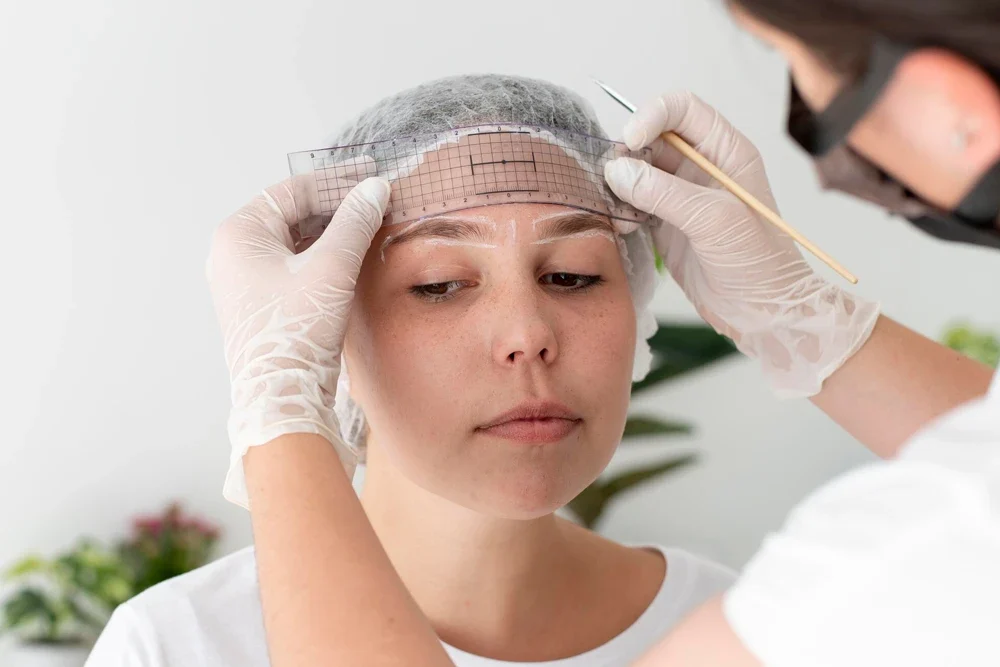
- Planning and Implementation: Your skin is cleaned and the injection points are precisely marked. A cold compress can be applied before the procedure for your comfort. The procedure is performed with very fine needles and takes only a few minutes.
- The post: There is no recovery period after the procedure and you can return to your daily life immediately. The results start to appear in 3-7 days and are finalized in week 2. At this point we invite you for a follow-up appointment to make sure the result is perfect.
Things to Consider and Frequently Asked Questions After Forehead Botox
- Will my eyebrows fall out? No, your eyebrows will not fall when done by the right specialist, with the right technique and dose. On the contrary, in some cases, even a slight lifting effect can be achieved.
- How lasting are the results? The effect of forehead botox lasts 4-6 months on average. This period can be prolonged with regular applications.
- I have very deep static lines, is botox enough? Botox may not completely eliminate static lines that are very deep and break the skin, but it softens them significantly. In such cases, Botox treatment can be used as a hyaluronic acid-based treatment to fill under the line. dermal fillers can be combined with treatments.
Forehead Botox is a simple but highly effective treatment that will refresh your self-confidence with the smooth and rested expression it will give your face. The safety and effectiveness of this treatment, Institutions such as the US National Library of Medicine (MedlinePlus) and has been documented in detail by the experts in the field. We invite you to contact us to plan the best and most natural result for you. Kadikoy‘I look forward to seeing you at my clinic in Istanbul.
Application
Botox Treatment
You can have this procedure done at Dr. Melis Ülger’s office in Kadıköy Caddebostan.
Frequently Asked Questions
Do forehead lines really change facial expressions?
Yes. As horizontal lines become more pronounced, a person may appear constantly tired, anxious, or tense—even when they’re well-rested. Most clients come to the clinic not because they say, "I have wrinkles," but because they say, "I always look like I’m frowning." This can also lead to giving the wrong impression in social interactions.
Why is the frontalis muscle constantly active?
The frontalis is a broad, flat muscle that raises the eyebrows. It contracts with every eyebrow-raising movement, causing the overlying skin to fold like an accordion. This is a movement that is repeated many times throughout the day without us even realizing it.
Why do the lines become permanent?
In youth, the skin is elastic thanks to high levels of collagen and elastin; when the muscles relax, it immediately returns to a smooth state. With age and the effects of sun damage, the skin loses this ability to rebound. Every contraction leaves a small mark, and over time, these marks deepen, turning into permanent static wrinkles.
How does Botox change this picture?
Botulinum toxin injected into specific points of the frontalis muscle temporarily blocks communication between the muscle and the nerve. The overactive muscle relaxes and enters a resting state, preventing constant contraction of the skin and significantly softening horizontal lines.
Is the goal to completely stop the muscle?
No. The goal is not to paralyze the muscle, but simply to control its excessive activity in order to achieve a calmer, smoother forehead surface. During this recovery period, the skin also has a chance to repair itself.
Sources

You may also like
-

What to Do If Swelling After Botox Doesn’t Go Away
How long does swelling after Botox last, and which signs call for a doctor? Learn the difference between normal edema and persistent swelling, and book from Caddebostan. -

Botox Reviews: Real Patient Experiences
How do Botox patients describe the process? First-session expectations, concerns about looking natural and frequently asked questions from Dr. Melis Ülger’s clinic. -

Botox Brands: The Difference Between Botox, Dysport, and Xeomin
Botox Brands: What’s the difference between Botox, Dysport, and Xeomin? Dr. Melis Ülger explains the active ingredient, unit dosage, and onset of action.
 Türkçe
 English