





Forehead Botox: A 2026 Guide to Solving Forehead Lines
28/07/2026
Nose Filler: Non-Surgical Rhinoplasty 2026
29/07/2026How Is Mesotherapy Performed? Do the Needles Hurt?
Most of my clients have already heard that the treatment works; what really puzzles them is the procedure itself. When they ask how mesotherapy is performed, my short answer is this: the session is a five-step procedure that begins with a skin analysis, proceeds with microinjections, and concludes with skincare recommendations. The needles are fine, the session is brief, and the pain is significantly less than most people expect.
In this article, I’ll focus entirely on the process: how the steps work, which mesotherapy needle is used, what the pain level is like, and how the needle-free alternative works. If you’re wondering what the method is and why it’s preferred, What is mesotherapy? You can find it all in my article. Here, we’ll discuss the entire process—from the moment you lie down on the table until you walk out the door when the session is over.
The method of administering mesotherapy varies depending on the target area. Procedures performed without needles needle-free mesotherapy, which stimulates collagen production collagen injection, for skin blemishes spot mesotherapy and in the tension marks Crack Repair requires different protocols. The method used for hair loss also In this post I explained it.
Highlights
- The short answer to the question “How is mesotherapy performed?” is that it is a five-step procedure consisting of analysis, cleansing, anesthesia, microinjection, and aftercare.
- Since the area is numbed with a topical anesthetic cream, the sensation of the needle is usually limited to a slight prick.
- The injection itself usually takes 10–20 minutes; including the waiting time for the anesthetic to take effect, the total time spent at the clinic can be up to one hour.
- The mesotherapy needle is very fine and deposits the solution in small, targeted doses at a depth of approximately 1–4 mm below the skin’s surface.
- Needle-free methods offer a high level of comfort, but their depth of action is more limited than that of traditional injections.
How Is Mesotherapy Performed? The General Flow of the Session
I’ll summarize the question “How is mesotherapy performed?” in the simplest terms as follows: I assess the skin, prepare it, numb the area, administer the solution, and explain what happens next. Every step has a purpose, and I never skip any of them. Rushing through the procedure compromises both comfort and results.
Although the basic structure of the session remains the same for every client, the details vary from person to person. The treatment plan for dry skin is not the same as that for oily skin; the scalp and the under-eye area also require different levels of depth. That’s why the flow I describe below serves as a framework—I’ll tailor it to your skin’s specific needs.
Stages of Mesotherapy: A Step-by-Step Guide
The stages of mesotherapy consist of five main sections on paper, but each one involves smaller decisions within itself. In the table below, you can see the entire session at a glance, and then read the sections where I break down each step individually.
| Stage | What to Do | Approximate Duration |
|---|---|---|
| 1. Analysis | The skin type and target area are assessed, and a mixture is selected | 5–10 minutes |
| 2. Cleaning | The area is cleaned with an antiseptic solution | 2–3 minutes |
| 3. Anesthesia | Apply the anesthetic cream and wait | 20-30 minutes |
| 4. Injection | The mixture is applied to the skin in small spots | 10–20 minutes |
| 5. Maintenance | The area is cooled, and recommendations are shared | 5 minutes |
1. Skin Analysis and Area Plan
I start each session by examining the skin with a magnifying glass. I note the moisture level, pore structure, and any blemishes or redness, and mark the target area. These few minutes ensure that I set up each subsequent step correctly.
During the analysis, I’ll also ask about the products you’ve been using and any recent changes in your skin. That way, I can choose the right blend based on your needs that day. Even the same client’s skin may require a different formula depending on the season.
2. Cleaning and Antisepsis
I always clean the area before the needle enters the skin. Makeup, sunscreen, and the surface layer of oil are removed with an antiseptic solution. The goal is to prevent bacteria from entering through the injection sites.
This step may seem minor, but it’s the foundation of safety. Working on a sterile surface significantly reduces the risk of post-procedure irritation and infection. I never skip the cleaning step.
3. Anesthesia with Anesthetic Cream
In sensitive areas or for clients with a low pain threshold, I apply a topical anesthetic cream to the skin. We wait 20–30 minutes for the cream to take effect; this is the longest but most relaxing part of the session. While waiting, most clients check their phones or chat.
Once the numbing effect sets in, the prickling sensation decreases significantly. Some clients don’t want the cream at all and say they can tolerate the prickling. We make the decision together—there’s no pressure.
4. Microinjection Technique
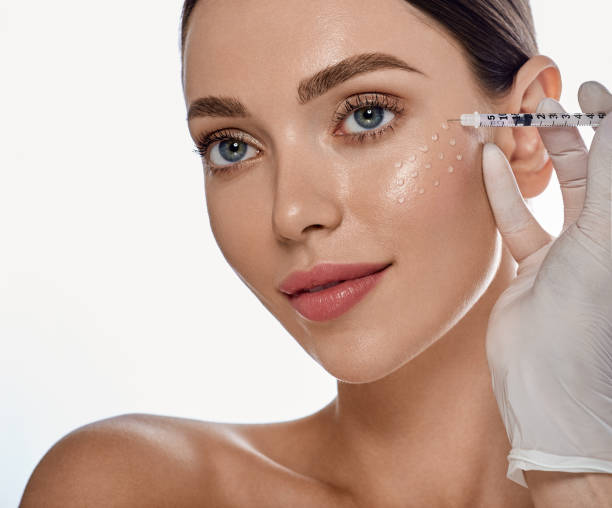
This step is the heart of the procedure. I apply the mixture in small, precise dots just beneath the skin’s top layer using very fine needles. In addition to the classic technique, which involves applying the mixture manually, dot by dot, I also use a special gun or a microneedling device for the procedure.
The dot spacing and needle depth vary depending on the area. In a delicate area like under the eyes, superficial and sparse touches are sufficient; on the scalp, I go a little deeper. Making this adjustment is the part that requires skill and determines the result.
5. Initial Care After the Session
Once the injection is complete, I’ll gently cool the area to soothe any redness. Then I’ll explain, step by step, what you need to be mindful of that day and for the next two days. It’s important that you leave the session well-informed to ensure the results last.
The thickness of the needle used and the sensations felt during the procedure mesotherapy needle I also explained this in my article.
Contact us
Create Your Appointment
Mesotherapy Needles and Devices Used
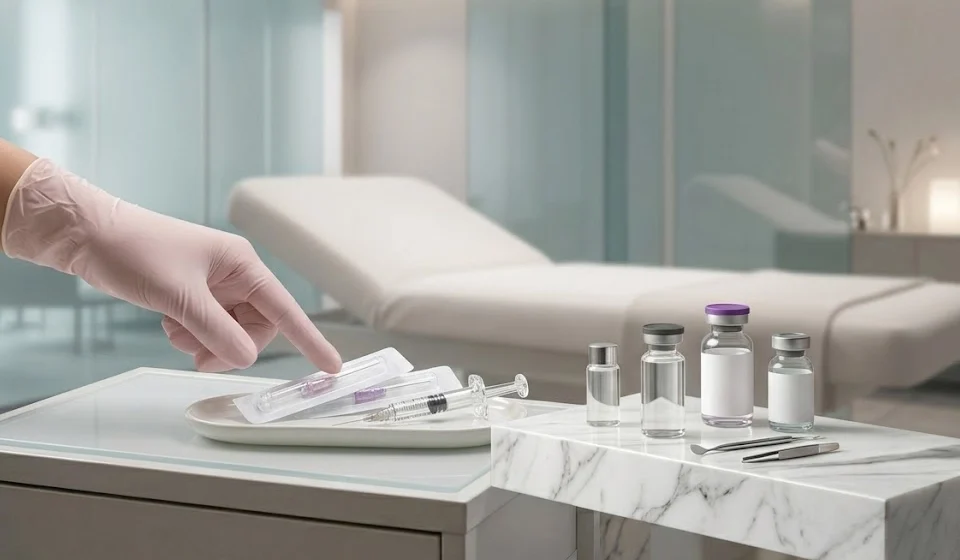
Mesotherapy needles are much thinner and shorter than the injection needles you see in everyday life. Thanks to their thinness, they cause minimal discomfort upon entry into the skin and deliver the solution precisely to the desired layer. It can be applied manually, one at a time, or delivered to multiple points simultaneously using a multi-tip applicator.
When working by hand, I adjust the depth and dosage at every point myself; this is a major advantage in sensitive areas. A microneedling device or pen, on the other hand, increases speed and ensures uniformity over large areas. I frequently use these devices on commonly treated areas such as the scalp; their specialized approach to hair also hair mesotherapy I explained it in my article.
Does Mesotherapy Hurt? What Is the Level of Pain?
“Does mesotherapy hurt?” is the question I hear most often before an appointment. The honest answer is that the pain isn’t unbearable; most clients describe the sensation as a mild prickling or tingling. The fine gauge of the needle and the short duration of the session minimize any discomfort.
The topical creams containing lidocaine and prilocaine that I use to numb the area have an active ingredient concentration of %5 and are applied about half an hour before the session. As a result, the needle prick is usually not even felt. Although pain perception varies from person to person, the option for numbing is always available.
How Long Does a Mesotherapy Treatment Take?
When people think of a mesotherapy procedure, they usually think of the injection part, and that part is actually quite short: in most areas, it’s over in 10–20 minutes. However, the total time spent at the clinic, including the wait for the numbing agent to take effect, can be up to an hour. That’s why I recommend factoring in not just the injection itself but also the preparation time when scheduling your appointment.
The duration of the procedure depends on the size of the treated area. While a single under-eye area can be treated in a few minutes, treating the entire face or a large area of the scalp takes longer. Still, mesotherapy is a convenient procedure that can be squeezed into your lunch break. If you’re wondering about the cost, Mesotherapy Prices In my article, I explained which factors are decisive.
How Is Needle-Free Mesotherapy Performed?
For those asking how needle-free mesotherapy is performed, here’s the short answer: instead of needles, a device is used. Techniques such as electroporation create temporary microchannels on the skin’s surface, through which active ingredients are delivered. Since there are no needles, there is virtually no sensation, which makes the method appealing to clients who are afraid of needles.
Although it offers a high level of comfort, its depth of penetration is more limited compared to traditional injections. Since the mixture remains in the more superficial layer, the needle-based method still has the edge when it comes to targeting deep hydration and collagen. I sometimes use both together as different steps in the same treatment plan. The table below provides a quick comparison of the two approaches.
| Comparison | Needle-Based Mesotherapy | Needle-Free Mesotherapy |
|---|---|---|
| Transmission path | Injection with a fine needle | Electroporation or device |
| Depth of effect | The middle layer of the skin | More superficial |
| Comfort | A slight feeling of sinking | Almost numb |
What to Do and What Not to Do After Mesotherapy?
Following a few simple rules after your session will directly enhance the results. Avoiding sun exposure and makeup for the first 24 hours allows the injection sites to heal properly. Drinking plenty of water also helps the mixture distribute more evenly within the skin.
The things to avoid are also clear. You should avoid hot showers, saunas, Turkish baths, and intense exercise on the same day; heat and sweating can increase redness. Rubbing, scratching, or peeling the area is also prohibited. If you are taking blood-thinning medication, please let us know in advance so that we can work together to reduce the risk of bruising.
Brief Preparation Before the Session
To get the most out of the treatment, all you need to do is make a few minor adjustments a few days in advance. Taking a short break from products containing strong acids and retinol—which can be harsh on the skin—makes it easier for your skin to respond to the treatment in a balanced way. For safety reasons, it’s better to come in with your natural skin tone rather than with a deeply tanned complexion.
Leaving your face clean and makeup-free on the day of your session will help me work more efficiently. It’s helpful not to come on an empty stomach to keep your blood pressure stable. Writing down any questions you have and bringing them with you will also help us clarify the plan together.
As for the general framework of the method: According to Wikipedia, mesotherapy is a technique in which active ingredients are administered into the mesoderm layer of the skin via numerous small injections; it became widespread through the work of French physician Michel Pistor in the 1950s; details Mesotherapy You can review it on the page. Tailoring the program to the individual is a key factor in both the outcome and safety.
Every skin type and every area requires a unique approach; that’s why I’ll create a personalized treatment plan for you following an evaluation. To ask questions or schedule an appointment, please contact my clinic in Caddebostan Communication through the page or directly mesotherapy You can contact me through my services page.
Frequently Asked Questions
What should I do before mesotherapy?
It’s enough to stop using products containing strong acids and retinol a few days in advance. On the day of your session, make sure your skin is clean and free of makeup, and don’t come on an empty stomach. It’s important to let us know in advance about any medications you’re taking to ensure a safe treatment plan.
Can I go back to work the same day after mesotherapy?
Most clients return to their daily routines immediately after the session. There may be mild redness in the treated area that can last a few hours. It’s enough to avoid strenuous exercise and hot environments that day.
How many injections are given during a mesotherapy session?
The number varies depending on the size of the treated area. A few dozen spot injections can be administered in a small area, while many more can be given over a larger area or on the scalp. Since each spot receives a very small dose, the total amount remains balanced.
Is bruising or redness after mesotherapy normal?
Mild redness is to be expected and will subside within a few hours. Minor bruising may occur, especially in areas with thin skin, but it will fade within a few days. If you are taking blood thinners, letting us know in advance will reduce the risk.
Is needle-free mesotherapy as effective as the traditional method?
The needle-free method is superior in terms of comfort, but its effects are more superficial. It’s a good option for superficial hydration and radiance. For deep hydration and collagen stimulation, however, the needle-based treatment delivers more powerful results.
How deep is the mesotherapy needle inserted?
The needle is typically inserted just below the skin’s surface, to a depth of approximately 1–4 mm. This depth is adjusted depending on the area; the injection is more superficial under the eyes and slightly deeper in the scalp. The goal is to deposit the mixture into the correct layer.

Appointment & Contact
Contact our clinic for reliable and personalized planning in medical aesthetic applications.
Write to Us
Let's Create Your Appointment Now
Application
Mesotherapy Treatment
You can have this procedure done at Dr. Melis Ülger’s office in Kadıköy Caddebostan.
Sources
Related Articles

 English