











How Is Mesotherapy Performed? The Session Process in 5 Steps
29/07/2026
How Many Sessions Are Required for the Golden Needle Treatment? The 3-4 Session Rule
30/07/2026Non-Surgical Nose Reshaping with Nose Fillers
When you look at your photo in profile, you might notice a small indentation on the bridge of your nose or a slightly drooping tip. But the idea of surgery might be intimidating. This is exactly where nose filling is coming up for discussion.
Nose filler is a non-surgical medical aesthetic procedure that reshapes the nose by adding volume to specific areas using a gel-based product containing hyaluronic acid. The procedure is quick, requires no scalpel, and allows you to return to your daily routine the same day.
In this article, we’ll discuss what a nose filler can and cannot correct, who it’s suitable for, and how it differs from surgical rhinoplasty. We’ve previously covered the general concept of fillers Guide to Facial Fillers As I explained in my post, our focus here will be entirely on the nose area.
Highlights
- Nose filler is a non-surgical procedure that improves the profile by adding volume to the bridge and tip of the nose using hyaluronic acid gel.
- This method does not reduce the size of the nose; it merely conceals indentations, lifts the tip, and corrects minor asymmetries.
- Bilimsel kaynaklara göre vücuttaki hyalüronik asidin yaklaşık %50’ye yakını deride bulunur, bu yüzden onaylı jel dokuyla uyumlu çalışır.
- The effect is not permanent; depending on the product used, it lasts an average of 9 to 18 months.
- The nose is a high-risk area due to its network of fine blood vessels; the procedure should only be performed by a physician who is familiar with its anatomy.
What Is a Nose Filler, and How Is It Administered?
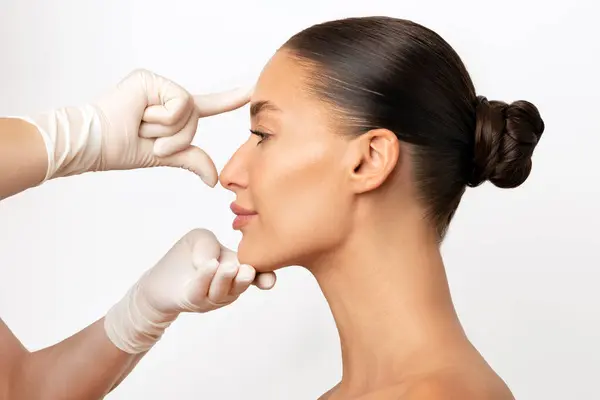
A nose filler is an injection procedure in which a gel-based product is injected under the skin to alter the shape of the nose. The goal is to create visual balance by adding tissue, not by removing it. Before the procedure, I carefully assess the structure of your nose and your facial proportions.
During the procedure, an anesthetic cream is applied to the area, and then the product is administered to the targeted sites using a thin cannula or needle. The gel I use contains cross-linked components that are also found in the skin’s natural structure hyaluronic acid ...contains. According to chemistry sources, a single gram of hyaluronic acid can bind many times its own weight in water; this water-retention capacity gives the gel both volume and a soft texture.
The whole process usually takes less than half an hour. If you're curious about the same principle Lip Filler Guide In my post, you can also find out how lip fillers work on the lips.
What Does Non-Surgical Rhinoplasty Change?
Non-surgical rhinoplasty does not completely reshape the nose from top to bottom; rather, it softens a few details that are visually distracting. The most common corrections I perform are camouflaging the indentation on the bridge of the nose, slightly lifting a drooping nasal tip, and balancing minor asymmetries. When the gel is applied to the right spot, the profile appears smoother.
In a nose with a nasal depression, applying the product immediately above and below the depression flattens the line and reduces the arched appearance. Here’s the interesting part: sometimes, by adding material to the nose, we can make it appear smaller, because the eye now perceives a balanced line rather than a jagged one. Still, this is a visual illusion—not an actual reduction in size.
How Is a Nose Tip Lift Performed?
A tip lift corrects a drooping appearance by lifting the tip of the nose a few millimeters upward and forward. When a small amount of gel is injected into the support structure immediately below the tip, the tip lifts slightly. This softens the drooping appearance in profile and creates a more balanced nose-lip angle.
This procedure can also be considered in conjunction with Botox for people whose corners of the mouth droop when they smile, but the two are distinct. Muscle-related drooping is corrected with a muscle-relaxing treatment; structural, permanent drooping, on the other hand, is addressed by the support provided by fillers. We’ll determine together during your consultation which option is right for you.
Contact us
Create Your Appointment
Which Corrections Are Possible, and Which Are Not?
The most common misconception about nose fillers is their limitations. This method adds tissue; therefore, it cannot reduce the size of a large nose, narrow a wide bridge, or alter the bone structure. If you’re considering this treatment because you think your nose is too large, surgical rhinoplasty may be the right option for you.
On the other hand, the gel is quite effective for minor and moderate corrections. In the table below, I’ve summarized which expectations are realistic.
| Expectation | Is It Possible with Fillers? | Description |
|---|---|---|
| Camouflage for a dip in the road | Yes | The line is smoothed out by adding volume to the indentation |
| Lifting a Drooping Nose Tip | Yes | A small amount of gel lifts the tip a few millimeters |
| Compensating for Minor Asymmetry | Yes | Symmetry is approximated by adding an element to one side |
| Rhinoplasty to Reduce a Large Nose | No | Fillers add volume, they don’t remove it; reduction requires surgery |
| Slimming a Broad Back | No | Bone and cartilage structure cannot be replaced with gel |
Who Is a Good Candidate for Liquid Rhinoplasty?
Non-surgical rhinoplasty is a good option for people who do not want surgery but wish to correct a minor imperfection on their nose. The most common candidates are those with a slight indentation on the bridge of the nose, a drooping tip, or minor irregularities remaining after rhinoplasty. For those who aren’t ready for surgery but are looking for a solution, liquid rhinoplasty is a low-risk first step.
This procedure is not suitable for everyone. Those who have previously had permanent fillers injected in this area, those with active skin infections, pregnant or breastfeeding patients, and those expecting drastic changes are not candidates for this procedure. If your expectation is to completely change the shape of your nose, I will guide you appropriately during the initial consultation. An honest “this isn’t right for you” is far more valuable than a procedure performed under pressure.
The Difference Between Non-Surgical Rhinoplasty and Surgical Rhinoplasty
Non-surgical rhinoplasty is often confused with traditional nose surgery, but they are completely different procedures. Non-surgical rhinoplasty uses a temporary gel injected with a needle that dissolves over time to achieve visual correction. Surgical rhinoplasty, on the other hand, is a procedure that reshapes bone and cartilage; it is permanent and requires anesthesia.
Which one is right depends entirely on your expectations. For minor corrections and subtle imperfections in the profile, gel is often sufficient. If you want a structural, major, and permanent change, I would refer you to a plastic surgeon. The two methods are not competing; they are solutions for different needs.
Why Is Safety in the Nose Area So Important?
The nose is one of the areas of the face with the densest network of blood vessels, which makes it particularly sensitive to fillers. Accidental injection of the gel into a blood vessel, though rare, can lead to circulatory problems in the tissue. For this reason, although nose fillers are performed as frequently as lip or chin fillers, they require a physician with a thorough understanding of anatomy.
Before the procedure, you should discuss blood-thinning medications and supplements with your doctor and, if possible, stop taking them a few days in advance. I work exclusively with approved, reversible products because, if necessary, these gels hyaluronidase The ability to break it down using the enzyme in question is the most important safety margin. Unregulated products and inexperienced application are the greatest sources of risk.
Side effects are usually temporary: mild swelling, redness, and minor bruising subside within a few days. Serious complications are rare, and the risk is even lower when the procedure is performed by a qualified professional. Detailed aftercare instructions Filling You can also find it on our services page.
How Long Does a Nose Filler Last?
Nose filler is not a permanent procedure; the gel is naturally absorbed by the body over time. The duration of results varies on average between 9 and 18 months, depending on the concentration of the hyaluronic acid used and the mobility of the area. Since the nose is not an area that moves constantly like the lips, the results typically last a little longer than they do for the lips in most people.
This temporary nature is actually a guarantee. If you're not satisfied with the results, you can wait or reverse the process with the enzyme. When it's time for a touch-up, you can adjust the plan or stop it altogether.
What Should I Keep in Mind to Achieve a Natural-Looking Result?
A natural-looking nose is often achieved with minimal product. My goal is not to change your nose, but to soften the details that bother you while preserving your face’s natural balance. That’s why I take a measured approach during the first session and, if necessary, perform a minor touch-up a few weeks later.
Product selection also directly determines the outcome. I prefer gels with a denser consistency that conform to the tissue along the bridge of the nose; this creates a defined line that isn’t too harsh. It’s not accurate to fully assess the results until the swelling subsides, so please don’t panic when you look at the photos from the first day. The final appearance typically settles within about two weeks.
Frequently Asked Questions
Does a nose filler hurt?
Since I apply numbing cream to the nose before the procedure, there is almost no pain during the treatment. Most people feel only a slight touch and pressure. Many of the gels I prefer also contain an anesthetic that enhances comfort.
Does a nose filler make the nose smaller?
No, fillers add tissue; they don’t remove it. However, by correcting the nasal bridge depression, they can make the nose appear more balanced and, in some cases, smaller. Surgery is required for actual reduction.
When can I return to work after the procedure?
Most people return to their daily routines the same day. Mild redness and swelling subside within a few hours. On the first day, it is sufficient to avoid putting pressure on the area and to avoid excessive heat.
Can a nose filler be reversed?
Yes, hyaluronic acid-based gels can be dissolved using the hyaluronidase enzyme. If you’re not satisfied with the results or if any issues arise, we can dissolve the product quickly and remove it. This option for reversal is your greatest assurance when treating a sensitive area like the nose.
Can I get a nose filler after rhinoplasty?
Fillers are often used to correct minor irregularities that remain after surgery. However, you should wait until the healing process is complete. Before making a decision, I recommend that you consult with the surgeon who performed your procedure.
How many days does it take for the results to come in?
There may be some mild swelling in the first few days, so it’s not advisable to assess the results right away. The final appearance will settle in within about two weeks. If necessary, we’ll schedule a minor touch-up at the end of this period.

Appointment & Contact
Contact our clinic for reliable and personalized planning in medical aesthetic applications.
Write to Us
Let's Create Your Appointment Now
Application
Filling Application
You can have this procedure done at Dr. Melis Ülger’s office in Kadıköy Caddebostan.
Sources
Related Articles

 English