












Treatment for Enlarged Pores: 2026 Permanent Solutions
05/08/2026
Before and After Mesotherapy: 2026 Results and Process
06/08/2026HydraFacial or Carbon Peel: Which One Is Right for You?
One of the most common questions I’ve been getting at my clinic lately is this: I want to brighten my skin, but should I choose a HydraFacial or a carbon peel? Both refresh the skin, and both give it a “glow,” so it’s normal to get them mixed up. A carbon peel is a skin-brightening method in which liquid carbon applied to the skin is vaporized using laser pulses to remove surface impurities and dead skin cells. A HydraFacial, on the other hand, uses a needle-free vacuum tip to cleanse the skin with a water-based solution.
In this article, I’ll compare the two methods side by side and explain their differences in simple terms. My goal is to help you determine which one makes more sense for your skin before you come in for an appointment. After all, the right choice depends on your skin’s current needs.
Highlights
- There’s no single answer to the question of whether to choose a HydraFacial or a carbon peel; the decision depends on your skin’s specific needs.
- Carbon peeling is a laser treatment; HydraFacial, on the other hand, is a needle-free, water-based vacuum treatment.
- Neither method generally requires a recovery period, and the session lasts about 30–45 minutes.
- Carbon peels are best suited for oily and pore-prone skin, while HydraFacial is best suited for dry and tired skin.
- Amerikan Dermatoloji Akademisi’ne göre görünür cilt yaşlanmasının yaklaşık %90’ı güneşe bağlıdır; bu yüzden hangi yöntemi seçerseniz seçin güneş koruması şart.
What Is a Carbon Peel? (Hollywood Peel)
The short answer to the question “What is a carbon peel?” is this: a thin carbon solution is applied to the skin; the carbon settles into the pores; then a laser vaporizes the carbon with heat. As the laser fires, it both draws out the dirt adhering to the carbon and gently renews the skin’s surface. You’ll hear tiny “popping” sounds during the procedure, but it’s not expected to be painful.
This treatment also has a familiar name: the Hollywood peel. The name comes from its popularity as a quick way to brighten the skin before walking the red carpet. The carbon mask leaves the skin with an instant matte-to-glow contrast, making pores more visible. Oily and combination skin types often benefit the most from this method.
What Is a HydraFacial, and How Does It Work?
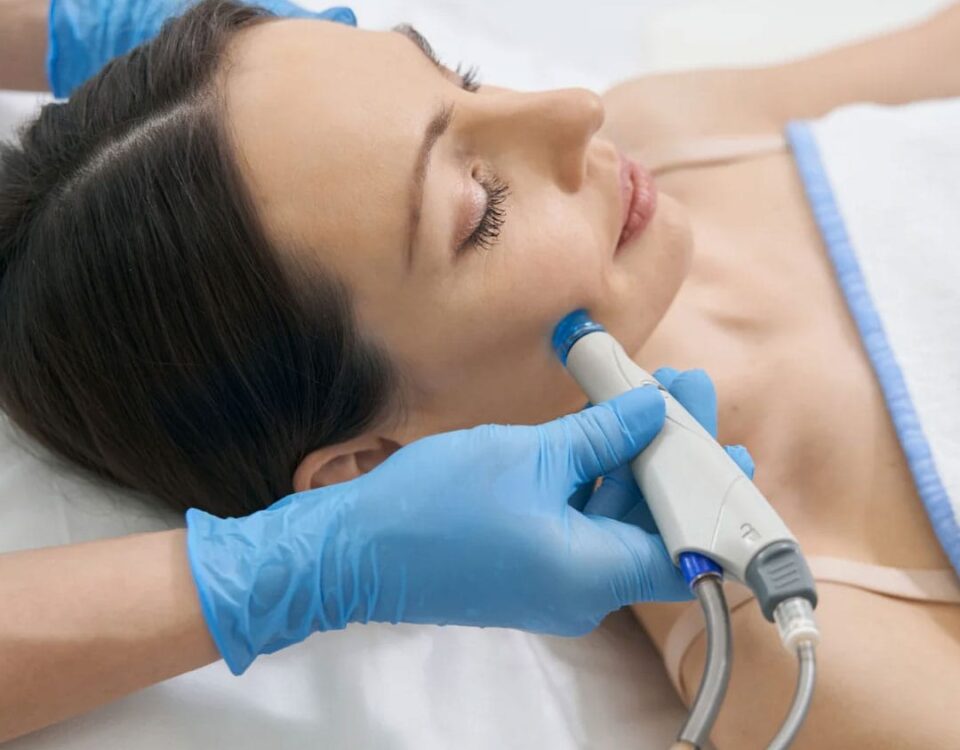
HydraFacial is a needle-free skincare treatment that uses a rotating vacuum tip and specialized solutions. The tip simultaneously removes dead skin cells, unclogs pores, and delivers a hydrating serum to the skin. In other words, cleansing and hydration are combined into a single step.
The main difference from a carbon peel is that it uses water and suction power instead of heat. As a result, the skin feels more “cleansed and nourished,” and heat-induced redness generally does not occur. The basic principle of the method what is hydrafacial I explained it step by step in my guide. As for how to establish a regular routine, hydrafacial skin care you can find in my article.
Skin Brightening Comparison: I'm Putting the Two Methods Side by Side
When comparing skin brightening treatments, three factors determine the choice: how the method works, what it targets, and how much it stresses the skin. Since carbon peeling is a laser treatment, it uses heat and is effective for issues such as pores, oil, and a dull complexion. Hydrafacial, on the other hand, excels at hydration and surface cleansing; since it doesn’t involve heat, it remains much gentler.
In terms of recovery, both procedures are relatively easy. There may be mild redness for a few hours after a carbon peel, while after a HydraFacial, most clients return to work without any visible signs of the treatment. The table below summarizes the topics I discuss most frequently at a glance.
| Comparison | Hydrafacial | Carbon Peel (Hollywood) |
|---|---|---|
| Principle of Operation | Water-based vacuum and serum | Carbon solution and laser heat |
| Main objective | Moisture, surface cleanliness, vibrancy | Oil, pores, matte finish |
| Sense of application | A cool, vacuum-like sensation and massage | A slight warmth and a faint crackling sound |
| Recovery time | Virtually none | A slight redness for a few hours |
| Suitable skin | Dry, tired, sensitive skin | Oily, porous, and combination skin |
| Frequency of sessions | Once a month, on a regular basis | As a course of treatment, a few sessions |
HydraFacial or Carbon Peel: Which Is Better?
When deciding between a HydraFacial and a carbon peel, the question “which one is better” is actually misleading. That’s because they serve different purposes; neither is superior to the other—they simply address different skin concerns. If your skin looks dull due to excess oil and visible pores, a carbon peel offers a more direct solution.
On the other hand, if your skin is dry, tight, and dehydrated, a HydraFacial is a wiser choice. So the right question isn’t “which one is better,” but “what does my skin need today?” Clarifying this with a skin analysis yields results much faster than trial and error.

Contact us
Create Your Appointment
Which One Is Right for Which Skin Type?
Skin type is central to this decision. For oily skin with blackheads and visible pores, a carbon peel reduces shine and smooths the skin’s surface. It’s also effective for combination skin by balancing oil in the T-zone.
For dry, thin, and easily irritated skin, the HydraFacial is the preferred choice because it provides moisture instead of heat. Its needle-free approach also offers peace of mind for skin prone to redness and sensitivity. If you’re wondering about other ways to boost your skin’s overall vitality, Benefits of HydraFacial My writing would be a good start.
Why Is Sun Protection Critical in Both Methods?
Whether you choose laser or vacuum treatment, post-treatment care is what determines how long the results last. American Academy of Dermatology, güneş korumasını bu parlaklığın en ucuz sigortası sayar; SPF 30 ürünlerin UVB ışınlarının yaklaşık %97’sini süzdüğünü belirtir. Yani seanstan çıktıktan sonra cildi güneşe hazırlıksız bırakmak, kazanılan tazeliği hızla söndürür.
This protection is even more important after a carbon peel, because skin treated with a laser remains sensitive to light for a while. After a HydraFacial, sunscreen is also the most practical way to maintain moisture and radiance. In short, no matter which method you choose, the process doesn’t end at the clinic.
Is It Possible to Combine the Two Methods?
Most of the time, you don’t have to choose between one or the other. The same skin can be both oily and dry at times; in such cases, I spread the two treatments out over different weeks. For example, you can schedule a carbon peel for pores and oil control, followed by a HydraFacial to restore moisture balance.
Instead of cramming both treatments into the same day, it’s more comfortable to leave a few days between them. This way, your skin reaps separate benefits from each session and doesn’t get overwhelmed. I’ll determine the right order and spacing for you on a personalized basis after examining your skin.
What Should I Consider When Making a Decision?
When making your decision, first describe your concern in a single sentence. If you say “oil, pores, dullness,” go with the carbon peel; if you say “dryness, tightness, lackluster skin,” go with the HydraFacial. Second, consider your schedule: both treatments are quick, but keep in mind that there may be some brief redness after the carbon peel.
Third, consider the long-term effectiveness of the treatment. Both methods are for surface-level care; deep wrinkles or significant sagging are not within their scope. If that is your goal, we’ll incorporate different treatments and develop a comprehensive plan.
Common Mistakes
The most common mistake I see is expecting a permanent transformation from a single session. Both methods refresh the skin, but their effects are maintained through regular repeat treatments. You shouldn’t confuse a one-time glow with lasting skin quality.
The second mistake is skipping at-home care. The hydration and smoothness achieved at the clinic will quickly fade without sun protection and moisturizing at home. The third mistake is poor timing; it’s best to postpone your session if you have active acne, a sunburn, or skin irritation. The plan that’s right for you hydrafacial Check it out on my services page and Communication You can contact me through my page, and we can work this out together.
Differences in Terms of Budget and Session Schedule
The two methods also differ in terms of cost. Carbon peels are generally planned as a course of several sessions, because the radiance achieved with the laser becomes more pronounced with regular repeat treatments. For this reason, it requires a slightly more structured budget at the outset.
HydraFacial, on the other hand, is effective even in a single session, and most clients continue with it once a month. It’s better suited for a small but consistent skincare routine. It’s wiser to base your decision not just on the price of a single session, but also on the frequency of follow-up treatments and your goals. During our consultation, we’ll work together to figure out which plan makes the most sense for you.
Frequently Asked Questions
Does a carbon peel hurt?
No, you shouldn’t feel any pain. During the laser pulses, you may hear faint clicking sounds and feel a slight warmth. Most clients describe the procedure as comfortable and are able to talk throughout the session.
Which is faster at brightening the skin: HydraFacial or carbon peel?
Both provide a noticeable refreshment on the same day. A carbon peel quickly reduces shine on oily skin, while a HydraFacial revitalizes dry skin with moisture. The right choice depends on your skin type.
Are carbon peels and Hollywood peels the same thing?
Yes, they are different names for the same procedure. "Hollywood peel" is the popular name for "carbon peel" that has become widely used among the general public. The procedure is performed using a carbon solution and a laser.
Are these procedures performed during the summer months?
HydraFacial can be comfortably performed year-round. Carbon peels, however, require high sun protection because they involve laser treatment and must be scheduled with extra care on days with intense sunlight. We’ll work together to adjust the schedule based on the season.
Which one is more effective for pores?
Carbon peeling significantly smooths the skin’s appearance by using heat to remove carbon from the pores. Hydrafacial also clears blockages using suction. To address persistent pore issues, however, it is necessary to incorporate skin-renewing treatments.
Are these treatments safe during pregnancy?

Appointment & Contact
Contact our clinic for reliable and personalized planning in medical aesthetic applications.
Write to Us
Let's Create Your Appointment Now
Application
HydraFacial Treatment
You can have this procedure done at Dr. Melis Ülger’s office in Kadıköy Caddebostan.
Related Articles

 English