


How Does Hydrafacial Help with Oily Skin?

When you look in the mirror in the afternoon, there is that shine on the T-zone, the sticky feeling and make-up that just won’t stay put… This is what tires my patients with oily skin the most. Hydrafacial for oily skin is a medical skin treatment that softens the excess sebum collected in the pores with an acid solution, draws it out with a vacuum and then nourishes the skin with oil-free hydration. In other words, it manages oil not by drying the skin out but by rebuilding its balance of oil and moisture.
In this article I explain why the skin gets too oily, why oily skin still needs moisture and exactly what a session does in Hydrafacial treatment for oily skin. We will also talk about session intervals, what helps at home and which habits undo your efforts.
Highlights
- Hydrafacial for oily skin removes excess sebum with a vacuum and balances the skin with oil-free hydration; because it does not dry the skin out, it does not trigger rebound oiliness.
- Oily skin and hydrated skin are not the same thing; skin with oil on the surface can be dehydrated at the same time.
- For most oily skin, a reasonable plan is a few sessions 2-4 weeks apart at first, followed by a monthly maintenance session.
- According to a 2009 review by Picardo et al., about 57% of human sebum consists of triglycerides and free fatty acids.
- Oiliness is a condition you manage; sessions reduce shine but do not permanently silence the oil glands.
Shine or Glow? Defining Oily Skin Problems Correctly
There is a subtle but important difference between the natural glow of healthy skin and the shine of oily skin. Glow comes from the skin’s hydrated, smooth, light-reflecting healthy structure. Shine is the greasy look created by a layer of excess sebum on the skin’s surface.
Oily skin is not just a cosmetic concern. It is a biological condition that paves the way for enlarged pores, blackheads (comedones) and acne. Our goal is to reduce that bothersome shine while preserving the skin’s glow.
Why Does Our Skin Get So Oily?
Sebum (skin oil) is actually a necessary secretion for our skin. It softens, protects and keeps the skin supple. The problem starts when the oil glands (sebaceous glands) work more than needed.
Knowing what sebum is also explains why we shouldn’t strip it away with harsh products. According to the review by Picardo et al. (2009), published in Dermato-Endocrinology and available in the NCBI archive, human sebum contains about 57% triglycerides and free fatty acids, 26% wax esters and 12% squalene. This mixture is part of the skin’s protective shield; if you strip it away completely, the skin produces more to close the gap.
The main causes of overproduction are:
– Genetics and hormones: The most decisive factors. In puberty, the second half of the menstrual cycle, pregnancy or periods of stress, the effect of androgen hormones speeds up the oil glands.
– The wrong skincare: Soaps or alcohol-based toners that over-dry the skin lead it to produce more oil to protect itself. We call this rebound oiliness.
– Environmental factors: Hot and humid weather can increase the activity of the oil glands. Istanbul’s summer humidity has taught most of us this well.
– Nutrition: High-glycaemic (sugary and starchy) foods can trigger oiliness by raising insulin levels.
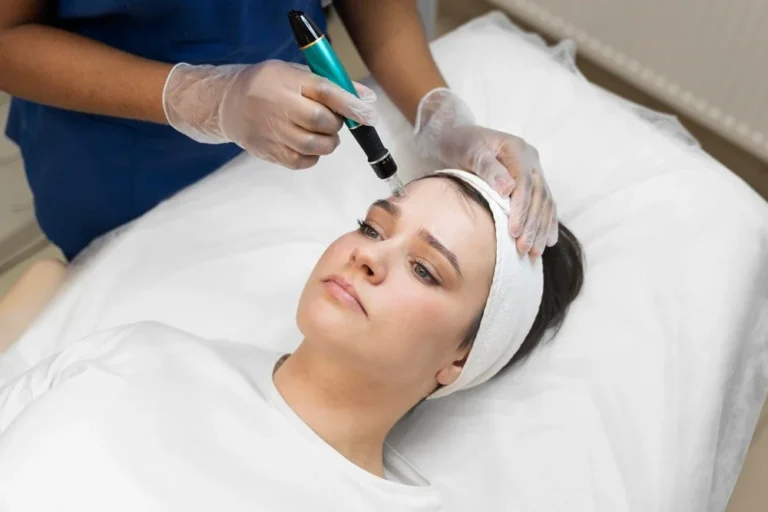
Does Oily Skin Need Moisture?
Yes, it does. Oil and water do different jobs in the skin: sebum covers the surface, while moisture maintains the water balance between cells. Skin that shines on the surface may be dehydrated in the lower layers.
I see this often in my clinic. The patient thinks her face is oily and stops using moisturiser, and the skin keeps shining while it becomes tight and flaky. Skin that is thirsty for moisture works its oil glands even harder to repair its barrier; the result is a mixed picture that feels both dry and oily.
In short, the idea “my skin is oily, I don’t need a moisturiser” is the most common misconception in oily skin care. The right choice is light hydration that doesn’t clog pores or weigh the skin down.
Why Does Hydrafacial Work Differently on Oily Skin?
Classic facials mostly wipe oil off the surface or try to empty the pores by squeezing them by hand. This method can irritate the skin and its effect is short-lived. Hydrafacial, on the other hand, combines cleansing and hydration in the same session with Vortex-Fusion® technology.
– Deep cleansing without irritation: The vacuum draws out the oil inside the pores; there is no need for squeezing.
– Chemical peel effect: Salicylic acid dissolves the oil in the pores.
– Maintaining moisture balance: As it removes oil, it replaces it with hydration from hyaluronic acid. Because the skin doesn’t dry out, it doesn’t produce oil in response.
The Hydrafacial Protocol for Oily Skin: Purification in 3 Steps
In the protocol I use for oily skin, each stage uses solutions that target sebum balance. I adjust the solution strength and vacuum power according to the skin’s condition on the day.
Step 1: Deep Peel with Salicylic Acid
The GlySal™ solution used at the start of the session is a mixture of glycolic and salicylic acid and works very well on oily skin. Salicylic acid (BHA) is an oil-soluble acid. Thanks to this property, it gets inside the pore and loosens the hardened sebum and dead cells there.
Glycolic acid, meanwhile, thins the layer of dead cells on the surface. This way, in the next step the vacuum reaches the softened plug much more easily.
Step 2: Physical Cleansing of the Pores with Vacuum Technology
This stage, carried out with the Beta-HD™ Clear solution and the Vortex-Extraction™ tip, is the part oily skin loves most. While the device vacuums out the oil and dirt inside the pores, it soothes the skin with a solution containing honey extract and willow bark extract. My patients are usually a little surprised when they see the cloudy fluid collected in the waste canister at the end of the session.
Step 3: Restoring Oil Balance with Hydration
The Antiox+™ serum applied in the final stage provides oil-free hydration. The low-molecular-weight hyaluronic acid it contains delivers moisture without weighing the skin down or clogging the pores. This step helps the skin restore its hydrolipid balance, the shared protective layer of oil and water.
An Extra Step for Oily Skin: Blue LED Light
For oily and acne-prone skin, a step I often add at the end of the protocol is blue LED light. Blue light helps suppress the growth of Cutibacterium acnes, the bacterium associated with acne. It supports the calming of existing spots and helps reduce the risk of new inflamed ones.
Expectations need to be set correctly here. Blue light does not shut down the oil gland; it calms the inflamed side. Oiliness itself is managed by cleansing, hydration and home care together.
Let's Create Your Appointment Now
Leave your name and phone number and we will call you to discuss the right treatment and an appointment time.
Reach us by phone+90 532 336 52 00Matching Sessions and Home Care to Your Concern
The table below summarises the complaints I hear most often with oily skin, which step of the session addresses each one and what we support it with at home. I always tailor the plan to the individual after a skin analysis.
| Concern | Hydrafacial Step | Home Care Support |
|---|---|---|
| Midday shine on the T-zone | Acid peel and vacuum removal of surface sebum | Gentle gel cleanser at night, oil-free moisturiser in the morning |
| Clogged pores and blackheads | Emptying the pores with the Vortex vacuum tip | Salicylic acid (BHA) 2-3 nights a week |
| Distinct pore appearance | Hyaluronic acid serum after extraction | Serum containing niacinamide |
| Skin that dries out and then gets oily again | Oil-free hydration infusion with Antiox+ | Light moisturiser with ceramides or hyaluronic acid |
| Tendency to breakouts | Blue LED light | Choosing non-comedogenic products |
| Make-up sliding off during the day | Sebum cleansing and light hydration | Oil-free sunscreen with a matte finish |
How Many Sessions, and at What Intervals?
For oily skin I usually plan 3-4 sessions 2-4 weeks apart at first, then we move to a monthly maintenance session. This interval matches the skin’s renewal rhythm and doesn’t give the pores a chance to fill up again. During periods of strong hormonal fluctuation we may shorten the interval slightly.
It is important to keep the interval neither too short nor too long. Aggressive cleansing once a week irritates the skin, while a session every three months can’t keep up with oil build-up. I describe the general flow of the treatment and its use on other skin types in my hydrafacial skin care you can find in my article.
What to Expect After Treatment: a Matte Finish and Pore Appearance
Right after the session you feel a noticeable freshness and matte finish on the skin. Emptied pores look cleaner and smaller. With regular sessions the skin settles at a more balanced oil level and that shiny layer appears later in the day.
The appearance of pores deserves a separate word. When the plug is emptied the pore looks smaller, but the actual size of the pore is also inherited. For noticeably enlarged pores, planning the treatment together with pore tightening treatments gives a more realistic result.
What Helps Oily Skin at Home?
You maintain at home the balance we build in the clinic. A simple routine is worth far more than a long list of products. Three ingredients are the most useful for oily skin in my experience.
– Niacinamide: Helps balance sebum production and refine the appearance of pores. Because the risk of irritation is low, almost every skin type tolerates it.
– BHA (salicylic acid): Gets inside the pore and prevents clogging. A few nights a week is enough; using it every day can dry out the skin.
– The right moisturiser: Choose a gel or light lotion labelled “non-comedogenic”. In the morning, complete it with an oil-free sunscreen.
The American Academy of Dermatology recommends gentle cleansing twice a day and an oil-free moisturiser for oily skin. American Academy of Dermatology data show that acne is the most common skin condition in the US, affecting up to 50 million people every year. Because oiliness lays the groundwork for it, your home routine is not a detail to take lightly.
Mistakes That Undermine Hydrafacial Results for Oily Skin
To protect the result we achieve in the clinic, here is what you should avoid at home:
– Washing your skin with harsh soaps until it squeaks. This dries out the skin and starts rebound oiliness.
– Washing your face three or four times a day. Cleansing morning and evening is enough for oily skin.
– Forcing the skin with harsh physical scrubs or granular exfoliators. Irritated skin produces more oil.
– Skipping moisturiser, or pressing blotting papers on your skin all day long.
– Squeezing by hand and constantly touching your face. This carries bacteria into the pores; I explain why you shouldn’t remove blackheads by hand in my HydraFacial for blackheads I explained this in detail in my article.
Does Oily Skin Ever Go Away Completely?
The honest answer: no, but it is easy to manage. Oily skin is largely a genetic and hormonal trait; no surface treatment can shut down the oil glands. Sessions and the right home care reduce shine, keep pores clean and help the skin behave in a more balanced way.
Sebum production naturally decreases with age, so skin that is oily in your twenties can become more balanced in your thirties. Until then, our aim is not to punish the skin but to build a routine that works with it. Rather than expecting everything to change in one or two sessions, it is better to assess a period of two or three months.
Our Approach to Sebum Balance at Our Clinic in Kadıköy
Kadikoy At my clinic in Caddebostan I treat oily skin by balancing it, not drying it out. After a skin analysis, I personalise the hydrafacial protocol to your skin’s oil level (acid strength, vacuum power, need for LED). My aim is to keep excess oil under control without damaging the skin’s protective barrier.
You can read the details of the treatment and who it is suitable for on my hydrafacial service page. If you have active inflamed acne, sunburn or are using strong products such as retinol, we will decide on the timing of the session together.
Oily skin doesn’t shine at the same time of day for everyone, nor does it react the same way to the same product. If you’d like to read your skin’s oil rhythm together and build a plan that suits it, you can reach our clinic in Caddebostan via the Contact page. Dr. Melis Ülger, Medical Aesthetics Specialist. Manages shine and congestion in oily and combination skin with hydrafacial protocols that protect the skin’s moisture barrier and simple home routines.
The recommendations on sebum, moisture balance and home care in this article have been reviewed for medical accuracy by Medical Aesthetics Physician Dr. Melis Ülger.
Application
HydraFacial Treatment
You can have this procedure done at Dr. Melis Ülger’s office in Kadıköy Caddebostan.
Frequently Asked Questions
How can you tell oily skin from dehydrated skin?
If the surface shines but the skin feels tight during the day, the picture is usually dehydrated oily skin. Skin that loses water increases sebum production to protect its barrier; while the surface gets oily, the lower layer stays dehydrated. A routine built without telling the two apart doesn’t work.
Does drying out the skin reduce oiliness?
It has the opposite effect. Harsh cleansers and alcohol-based toners leave a feeling of freshness in the short term, but the skin increases production to make up for the oil it has lost. A few weeks later you are left with a surface oilier than at the start.
What triggers oiliness?
Genetic predisposition is decisive, but hormonal fluctuations, irregular sleep, a high-glycaemic diet and stress can also increase sebum production. Production rises in hot and humid weather, while in winter a different balance problem appears due to a weakened barrier.
Does the appearance of pores improve as oiliness is controlled?
As sebum balance is restored, the appearance of pores also improves, because the duct works under less load. But a pore is not a lid; the goal is not to close it but to empty it and support the surrounding tissue.
Is there a link between blackheads and oiliness?
Blackheads form when excess sebum combines with dead cells and clogs the pore opening. That is why managing oiliness and treating blackheads are handled as part of the same plan.
Frequently Asked Questions
How can you tell oily skin from dehydrated skin?
Oily skin shines throughout the day but doesn’t feel tight. Dehydrated skin, even if it shines on the surface, feels tight after washing, flakes in places and shows fine lines more clearly. The two can occur at the same time; a skin analysis shows the difference most clearly.
Does drying out the skin reduce oiliness?
No, it often does the opposite. Skin dried out with alcohol-based toners or harsh soap produces more sebum to make up for the protection it has lost. Gentle cleansing and a light moisturiser give a more balanced result.
What triggers oiliness?
The strongest factors are genetic predisposition and androgen hormones. Stress, hot and humid weather, a high-glycaemic diet and products that dry out the skin can also speed up the oil glands.
Does the appearance of pores improve as oiliness is controlled?
As oil and plugs decrease, pores look cleaner and smaller. However, because pore size is partly inherited, additional treatments may be needed for noticeably enlarged pores.
Is there a link between blackheads and oiliness?
Yes. A blackhead forms when sebum collecting at the pore opening mixes with dead cells and darkens on contact with air. The more sebum there is, the higher the risk of clogging.
When does the skin become oily again after a session?
Because the oil glands keep working, the skin produces sebum again within a few days; this is normal. The difference is that shine appears later and less. With regular sessions and a home routine, this effect lasts longer.

You may also like
-
Hydrafacial Winter Prep: How to Prepare Your Skin for Cold Weather
What does a Hydrafacial winter prep session do for the skin? Dr. Melis Ülger explains the moisture barrier, how often to have sessions in winter and what to change in home care. -
HydraFacial Reviews: 2026 Real Experiences
Are HydraFacial reviews reliable? Why do most negative reviews come from counterfeit devices, and how can you tell if a review is genuine? Book an appointment in Caddebostan. -
Men's Skincare: A 2026 Guide to Hydrafacial
Why is men’s skincare different? Dr. Melis Ülger explains how HydraFacial can help skin that is thick, oily, and damaged by shaving. Book an appointment.
 Türkçe
 English