


Application of Hydrafacial for Different Skin Types: A Special Protocol for Each Skin

Highlights
- HydraFacial is not a standard treatment; it is tailored to your skin type.
- A separate protocol is followed for oily and acne-prone skin.
- The approach differs for dry, sensitive, and rosacea-prone skin.
- Protocols for mature and blemished skin are covered under separate headings.
Application of Hydrafacial for Different Skin Types: A Special Protocol for Each Skin
One of the biggest mistakes often made in the world of skin care is to think that a "one size fits all" approach will give the same results for every patient. However, each individual's skin structure, genetics, lifestyle and the environmental factors they are exposed to are as unique as a fingerprint.
Application of Hydrafacial for Different Skin Types
While some skins suffer from excessive oiliness and acne, others flake from dryness; some are so sensitive that they turn red at the slightest touch, while others struggle with sun spots. At this point, the world's most preferred medical care technology Hydrafacial, comes into play with its “customizable” infrastructure. Hydrafacial is not just a standard machine that washes and vacuums the face; it is a modular system where every step from the serums used (booster) to the suction power of the vacuum and acid ratios can be adjusted according to the needs of the patient. As Dr. Melis Ülger, Istanbul, Kadikoy‘In my clinic in Istanbul, Turkey, after analyzing my patients“ skin in detail, I transform the device into a ”treatment station" specific to their skin type. In this guide, we will examine in detail how Hydrafacial is adapted to different skin types (oily, dry, sensitive, mature, blemished) and which specific protocols we apply for each skin type.
Hydrafacial is Not a "Standard" Treatment: The Power of Personalization
The key feature that sets Hydrafacial apart from other treatments is the flexibility of its "Vortex-Fusion" technology. By combining the device's tips, serums and LED light options, thousands of different variations can be created. One patient may receive a 7.5% acid peel while another receives 30%. One may be given a hydrating serum while another receives a brightening serum. This flexibility is the key to the success of the treatment.

1. Protocol for Oily and Acne Prone Skin
The biggest problem of oily skin is excessive sebum production, enlarged pores and black/whitehead formation due to congestion. Hydrafacial protocol for this skin type is based on “Deep Cleansing and Balancing”.
Beta-HD Serum and Salicylic Acid Power
In the oily skin protocol, the device's reservoir Beta-HD™ serum is inserted. The main component of this serum is Salicylic Acid (BHA). Salicylic acid is fat-soluble, so it penetrates deep into the pores, dissolves and liquefies frozen oil (sebum plugs). It removes shine from the skin surface and mattifies it.
Blue LED Light Therapy: Fight Bacteria
At the end of the protocol Blue LED Light is applied. The blue light wavelength is used P. acnes destroys bacteria by targeting them (Porphyrin activation). In this way, existing acne dries up and the formation of new ones is prevented.
Tightened Vacuum Setting and Comedone Removal

Oily skin is usually thick and highly tolerable. For this reason, the vacuum pressure is set to a higher level when working on the T-zone (forehead, nose, chin). This powerful suction physically pulls out stubborn blackheads.
2. Protocol for Dry and Dehydrated Skin
Dry skin has a weak barrier, is prone to fine lines and looks dull. For these skins, the “Barrier Repair and Moisture Restoration” protocol is applied instead of aggressive cleansing.

Hyaluronic Acid Infusion: Saturating the Skin with Water
The most critical stage of treatment Antiox+™ serum (also known as Antiox-6) is intensively infused. This serum contains low molecular weight Hyaluronic Acid, vitamins A and E and White Tea extract. When the serum is applied to the skin, the cells absorb water like a sponge and the skin is instantly plumped and fine lines are lightened.
Low Acid Rates (GlySal) and Gentle Peeling
Dry skin is sensitive to peeling. For this reason, the Glycolic Acid - Salicylic Acid mixture (GlySal) used in the peeling phase is selected at the lowest concentration (%7.5). The aim is not to exfoliate the skin, but to gently remove dead skin and allow the moisturizer to be absorbed. About the ingredients used to treat acne and oily skin US National Library of Medicine (NCBI) data confirm the efficacy of salicylic acid.
Let's Create Your Appointment Now
Leave your name and phone number and we will call you to discuss the right treatment and an appointment time.
Reach us by phone+90 532 336 52 003. Protocol for Sensitive and Rosaceous (Red) Skin
Contrary to popular belief, Hydrafacial can also be safely applied to sensitive skin and skin with Rosacea (Rosacea); however, it should be done with the “Calming Protocol” (Calming Protocol).
Rozatrol™ Booster Support and Calming
Specially developed for sensitive skin Rozatrol™ booster serum is used. This serum shrinks capillaries, relieves facial redness and calms the skin. Its special enzymes gently balance the excess sebum that triggers sensitivity.
Adjusting the Vacuum Pressure: Preventing Irritation
On sensitive skin, mechanical friction may increase redness. For this reason, the vacuum setting is set to the lowest level. Instead of dragging the head across the skin, the physician can proceed with “point touches” (Stamping technique). Thus, the skin is cleaned without irritation.
4. Protocol for Mature and Fine Wrinkled Skin (Anti-Aging)
For skin that has lost collagen with age, Hydrafacial turns into a “Rejuvenation Treatment” rather than a cleansing.
DermaBuilder™ Booster: Peptide Technology
The star of this protocol DermaBuilder™ is a special booster serum. Its rich peptide complexes (especially acetyl octapeptide-3) mimic and stimulate the skin's collagen and elastin production mechanisms. Clinically proven to reduce the depth of fine wrinkles with regular use. This is also called the “needle-free Botox effect”.
Red LED Light Therapy: Collagen Activation
At the end of the anti-aging protocol Red LED Light is used. Red light descends into the dermis layer of the skin and awakens fibroblast cells (collagen factories). Skin elasticity increases and gains a firmer appearance.
5. Protocol for Blemished and Tonally Uneven Skin
“Brightening Protocol” is preferred for patients with sunspots, pregnancy spots (melasma) or acne scars (PIH).
Britenol™ Booster: Vitamin C and Alpha-Arbutin Effect
Hydrafacial's most powerful weapon in spot treatment Britenol™ booster serum. Alpha-Arbutin (natural spot lightener) and stabilized Vitamin C suppress melanin production. When applied by concentrating on the blemish, it helps to lighten the color of the blemishes and equalize the skin tone over time. About care recommendations according to skin types American Academy of Dermatology (AAD) also proposes personalized approaches.

Hydrafacial for Men's Skin: Differences and Considerations
Male skin is 25% thicker than female skin, oilier, and prone to ingrown hairs (folliculitis) because of beard follicles. In the men's protocol:
- Higher acid concentrations (15% or 30% GlySal) can be used.
- The vacuum power is increased to remove ingrown hairs in the beard area.
- But if there is sensitivity after shaving, calming serums are added to prevent irritation.
Skin Analysis and Customized Planning at our clinic in Kadikoy
Kadikoy‘at our clinic in, Hydrafacial Before starting the application, we image your skin with professional analyzers. We determine what your skin needs “at that moment”. Maybe you have an oily T-zone but dry cheeks (Combination Skin); in this case, we apply a “hybrid” protocol that balances the oil in the T-zone and adds moisture to the cheeks. In our hands, Hydrafacial becomes a treatment that understands the language of your skin, rather than a standard care.
Application
HydraFacial Treatment
You can have this procedure done at Dr. Melis Ülger’s office in Kadıköy Caddebostan.
Frequently Asked Questions
Is HydraFacial a standard treatment?
No. It is a modular system in which every step—from the serums used to the vacuum suction power and acid concentrations—can be customized to the patient’s needs.
How extensive is the customization?
By combining tips, serums and LED light options, many variations can be created. One patient may receive a 7.5% acid peel while another receives 30%.
What does the protocol focus on for oily skin?
"It is based on "deep cleansing and balancing." The main issues with this skin type are excessive sebum production, enlarged pores, and the formation of blackheads and whiteheads due to clogged pores.
Which skin types are addressed individually?
Separate protocols are described for oily and acne-prone skin, dry and dehydrated skin, sensitive and rosacea-prone skin, mature skin with fine lines, and skin with dark spots and uneven tone.

You may also like
-
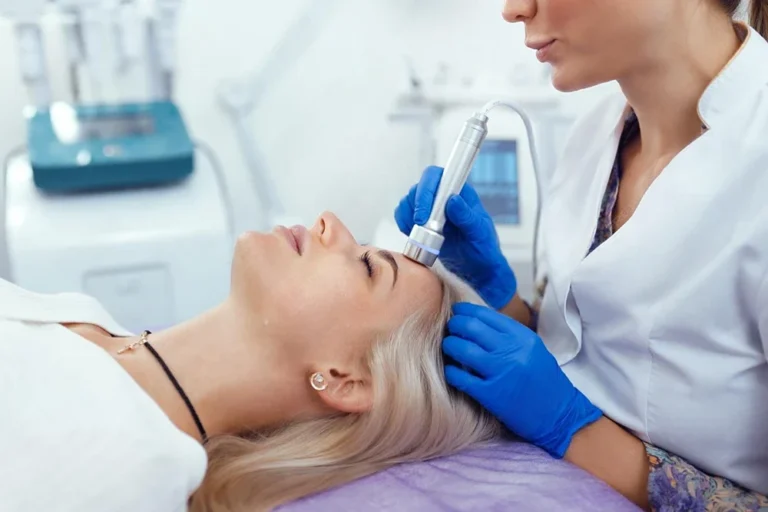
Hydrafacial Winter Prep: How to Prepare Your Skin for Cold Weather
What does a Hydrafacial winter prep session do for the skin? Dr. Melis Ülger explains the moisture barrier, how often to have sessions in winter and what to change in home care. -
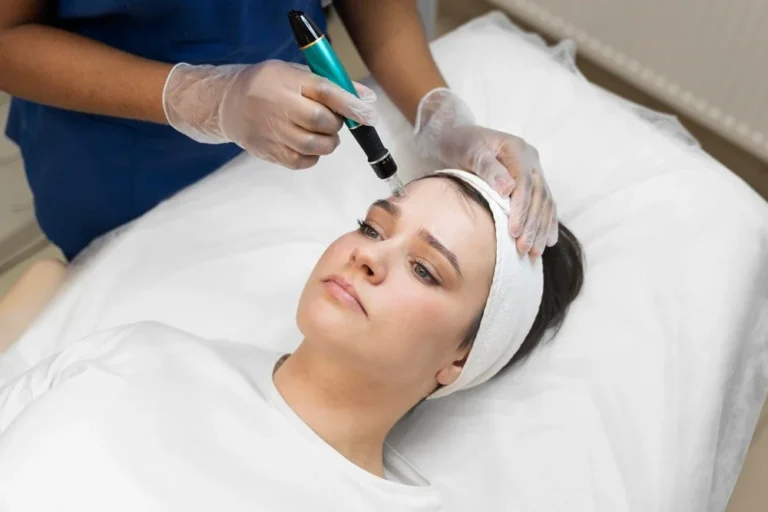
How Does Hydrafacial Help with Oily Skin?
What does Hydrafacial do for oily skin? Dr. Melis Ülger explains sebum balance, session frequency and home care. Contact us to book in Kadıköy. -
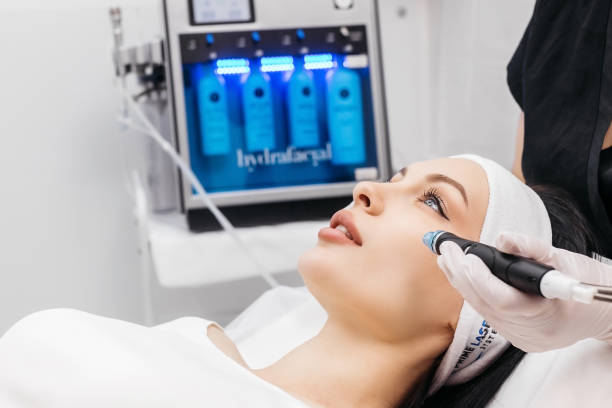
HydraFacial Reviews: 2026 Real Experiences
Are HydraFacial reviews reliable? Why do most negative reviews come from counterfeit devices, and how can you tell if a review is genuine? Book an appointment in Caddebostan.
 Türkçe
 English