


How Many mL for Lip Fillers? A 2026 Guide for Your First Session
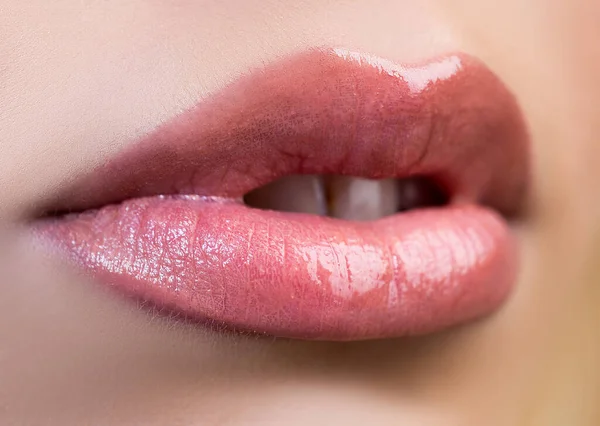
How Many ML Should Lip Fillers Be, and How Do You Decide?
The topic my clients research most before coming to the office is, How many ml is a lip filler? The question is: "How much should be done?" There are many different figures circulating online regarding this question, and most of them have nothing to do with your lips’ actual needs. Lip filler is a procedure that adds volume and shape to the lips by injecting hyaluronic acid measured in milliliters (ml).
The amount varies from patient to patient; there is no single dose that works for everyone. Your lip structure, current volume, and desired look are all taken into account. I generally prefer to discuss the goal first, rather than the amount.
In this article, I’ll explain the logic behind the “ml” concept, why we start with a small amount in the first session, and why the idea that “more ml is better” is misleading. The general framework of the procedure Lip Filler Guide You can find them all in my post.
Highlights
- There is no single answer to the question “How many milliliters of lip filler?”; the amount is customized for each individual based on their lip anatomy and the desired look.
- For most clients, 0.5–1 ml during the first session yields a natural and balanced result.
- A standard filler syringe contains 1 ml; this volume is about 20% of a teaspoon.
- More milliliters doesn’t always mean better; overfilling can distort the lip’s natural contour.
How Many ML Should Lip Fillers Be?
Short answer: If someone getting lip fillers for the first time asks how many milliliters they should get, I usually recommend starting with between 0.5 and 1 ml. This range is enough to define the lips while still looking natural, without appearing excessive. Even half a milliliter makes a noticeable difference on thin lips.
The exact amount will only become clear once I see you in person. I’ll assess the proportions of your upper and lower lips, the laxity of the surrounding tissue, and symmetry. The number isn’t a goal—it’s the result of the plan.
What Do "ML" and "Unit" Mean?
A millilitre is a unit that measures the volume of a liquid, and 1 ml is exactly the same as 1 cubic centimetre. In aesthetics, fillers come in pre-filled syringes; the most common syringe contains 1 ml of product. Since a teaspoon is about 5 ml, 1 ml is actually a volume as small as about 20% of a teaspoon.
The reason this small volume is so effective is the water-retention capacity of the material used. According to chemical sources, hyaluronic acid, is a molecule capable of binding approximately a thousand times its own weight in water. In other words, even a small amount creates a feeling of fullness in the tissue.
According to global reports from the International Society of Aesthetic Plastic Surgery (ISAPS), hyaluronic acid fillers are among the most commonly performed non-surgical aesthetic procedures. This prevalence stems from the procedure’s volume-based and reversible nature.
How Many ML Is the First Lip Filler Treatment?
To those who ask how many milliliters to use for their first lip filler, I always say the same thing: it’s wisest to start with a small amount. We want to see how your body reacts to the product during the first session. That’s why half a milliliter or one milliliter is a sufficient starting point for most people.
Another benefit of taking a measured approach during the first treatment is this: after living with the results for a few weeks, you’ll understand how you feel about them. If you find it’s not enough, it’s easy to add more during the next session. On the other hand, correcting an over-treated lip is both more difficult and more expensive.
Let's Create Your Appointment Now
Leave your name and phone number and we will call you to discuss the right treatment and an appointment time.
Reach us by phone+90 532 336 52 00What Factors Determine the Volume of Lip Filler?
The amount of lip filler in milliliters depends not on a single rule, but on a combination of several factors. Your current lip volume, skin thickness, age, and desired look are all taken into account. The same 1 ml will create a noticeable difference on thin lips but only a subtle one on full lips.
It also matters what your goal is. Do you just want a dewy, fresh look, or a noticeable increase in volume? The two require different amounts. In the table below, I’ve shared the approximate ranges used for typical goals.
| Target View | Typical ML Range | Expected Effect |
|---|---|---|
| Moisturizing and light refreshment | 0.5 ml | Softness at the corners of the lips, natural shine, and a very subtle touch of volume. |
| A Balanced First Application | 0.5–1 mL | A noticeable but natural-looking fullness; the most popular choice for the first session. |
| Significant increase in volume | 1 ml and above (in increments) | A fuller appearance; this is typically achieved over multiple sessions. |
| Asymmetry correction | Varies by region | The product is distributed not to one side, but to points that will create balance. |
Is More ML Better?
The most common misconception I have to correct is that more milliliters mean more beautiful lips. In reality, it’s not the amount that determines beauty, but the proportions and proper distribution. A volume that doesn’t match your facial features gives the impression of being puffy rather than full.
Some of the very prominent lips you see on social media are actually the result of multiple sessions and careful planning. They aren’t achieved in a single session using a large amount of product. I don’t think it’s right to determine the extent based on fashion trends rather than the desired outcome.
A Step-by-Step Approach to Natural Lip Fillers
I always recommend a gradual approach to clients who want natural-looking lip fillers. This means spreading the process over several sessions rather than achieving the desired volume in a single session. This way, the lip tissue has time to adjust to the product, and we can monitor the results step by step.
The step-by-step approach also reduces the risk of irreversible results. We monitor your lips between each session and adjust the plan as needed. While this slow progression may seem tedious, it usually yields the most natural results. For those curious about the procedure itself lip fillers You can find more details on my Services page.
What Are the Risks of Overfilling?
When more product is applied to a lip than it can hold, the result can be problematic not only from an aesthetic standpoint but also from a health perspective. The lip line becomes distorted, the product may spread to unwanted areas, and tension may develop in the tissue. For this reason, some clients come to me asking to have it “dissolved.”.
Excess filling material can often be dissolved using a special enzyme. This process in detail lip filler melting I explained this in my article. Still, it’s best to exercise caution from the very beginning so as not to reach this stage at all. For more detailed information on possible side effects, Risks of Lip Fillers You can take a look at my content.
The Relationship Between Lip Filler Units and Milliliters
In some clinics, the amount is also referred to as a “unit,” so the relationship between lip filler units and milliliters can be confusing. In fact, the valid and measurable unit for lip fillers is the milliliter; the term “unit” is more of a colloquial expression. In other words, “one unit” usually refers to one syringe, or 1 ml.
Ask that the amount be clearly stated in milliliters in the plan provided to you. Knowing how many milliliters of product will be used allows you to set realistic expectations and ensures that the process proceeds transparently. Making a decision without knowing the amount increases the likelihood that you will be dissatisfied with the result.
When Will the Results Be Finalized, and When Will the Addition Be Made?
It’s normal to experience some swelling in the first few days after the procedure, so I don’t assess the actual volume right away. We usually wait two weeks; once the tissue’s fluid balance stabilizes, the lip’s final appearance becomes evident. It’s best to make a decision based on this settled appearance.
If, at the end of this period, you feel your lips are still a bit too thin, we can make a measured addition during your follow-up appointment. Taking our time ensures that we accurately assess the results and avoid using more product than necessary. This way, we’ll reach your desired volume step by step and with confidence.
Application
Filling Application
You can have this procedure done at Dr. Melis Ülger’s office in Kadıköy Caddebostan.
Frequently Asked Questions
What is the best amount to start with for lip fillers?
For the first treatment, a volume of between 0.5 and 1 ml is recommended for most patients. This range enhances the lips while maintaining a natural appearance. The exact volume is determined during the consultation based on the structure of your lips.
How much volume does 1 ml of lip filler add?
1 ml is a small volume—about one-fifth of a teaspoon. However, thanks to hyaluronic acid’s water-retaining properties, this amount creates noticeable fullness in the lips. The extent of the effect varies depending on your natural lip structure.
If I get more ml, will my lips look better?
No, it’s not the amount that determines a good result—it’s the ratio and proper distribution. Too much product can distort the natural line of the lips and create a puffy appearance. For a natural result, it’s safer to proceed in moderation and step by step.
Is it better to split it into two sessions rather than doing too many ml in a single session?
Generally, yes. Spreading the amount out over several sessions allows the lip to get used to the product and ensures that the results progress gradually. It’s easy to add more if there isn’t enough; however, it’s harder to remove any excess.
What does "unit" mean in the context of lip fillers?
The unit of measurement for lip fillers is the milliliter; one unit generally corresponds to one syringe, or 1 mL. It would be best to request that the amount be clearly specified in mL in the treatment plan provided to you.
Does half a milliliter of lip filler make a difference?

You may also like
-

How Long Does Bruising Last After Chin Filler?
Why does bruising happen after chin filler, and how many days does it take to fade? The day-by-day colour changes, ways to reduce it and warning signs. Write to us if you have questions. -

Does Lip Filler Hurt? Pain Management and the Process
Does lip filler hurt, and how much pain is there really? Read about numbing cream, lidocaine-containing products and cannulas, and book your appointment in Caddebostan. -
When Do Lip Fillers Settle? The Process, Day by Day
When do lip fillers settle in, and how many days does the swelling take to go away? Dr. Melis Ülger explains the daily timeline from the first 24 hours through the second week.
 Türkçe
 English