


What is Filling Dissolution? Goodbye to Faulty Fillers with Hyaluronidase

Highlights
- Hyaluronic acid fillers can be dissolved using the hyaluronidase enzyme.
- The article lists the circumstances under which this procedure is used.
- The study examines the effect of the treatment on hyaluronic acid in the tissue itself.
- It explains how long you should wait before getting a refill.
“The appearance of ”duck lips", bags under the eyes or asymmetries on the face... Well, is it possible to correct this situation if you regret the filling you have done? Answer: Conclusion. The biggest advantage of hyaluronic acid-based fillers, Hyaluronidase can be completely or partially dissolved using the enzyme. As Dr. Melis Ulger, Istanbul, Kadikoy‘In my clinic in Istanbul, Turkey, I not only perform new fillings, but also provide professional support to my patients for the correction (revision) of incorrect applications made in other centers. In this guide, I will explain in detail how the filling dissolution procedure is performed, its safety and in which cases it is life-saving.
Not every filling procedure is perfect: Is There an "Undo" Button?
Unlike permanent fillers (silicone, etc.), Hyaluronic Acid (HA) fillers, which are the most commonly used fillers today, have an “antidote”, that is, an antidote. This is a great luxury of safety in aesthetic medicine. If you are not satisfied with the result or if a medical complication has developed, we can reverse the process. Beyond addressing aesthetic concerns, filler dissolution is a vital procedure for maintaining tissue health.
What is Hyaluronidase (Hyalase)? "Biological Eraser" of Aesthetics"
Hyaluronidase is an enzyme found naturally in our body that breaks down hyaluronic acid molecules. When this synthetically produced enzyme is injected into the filler area, it dissolves the cross-linked HA molecules (filler gel) into water and carbon dioxide within seconds. The body then excretes these liquefied residues through natural metabolic processes. In other words, Hyaluronidase is the “Ctrl+Z” (Undo) button of aesthetic medicine.
In which cases is filler melting applied?
Although our patients usually present due to aesthetic dissatisfaction, some conditions require urgent medical intervention.

1. Medical Emergency: Vascular Occlusion
It is the most feared complication of fillers. If the filler is accidentally injected into a vein or presses on the vein from the outside, blood will not flow to that area. Blanching of the skin, severe pain and subsequent bruising. In this case within minutes The vessel must be opened by applying hyaluronidase. Otherwise, tissue loss (necrosis) may occur.
2. The Tyndall Effect: Unwanted Blueness Under the Eyes
Under-eye light filling, If it is done on the very surface of the skin, it reflects the light incorrectly and creates a bluish / gray color under the skin (Tyndall Effect). In addition, thick fillers that are not suitable for this area retain water and cause bagging like “sausage”. The only way to correct this appearance is to dissolve the filler.
3. Filling Migration: "Mustache" Appearance above the Lip
When the lips are filled excessively or with the wrong technique, the filling material overflows above the lip border (vermillion line) into the mustache area. This causes a “duck lip” appearance when viewed from the profile and a filler mustache when viewed from the front. To restore the natural lip form, the overflowing parts should be melted.
4. Asymmetry, Clumping and Risk of Infection
In the case of hard lumps (granuloma) or late-stage infections (biofilm) that form even months after the filling, it may be necessary to remove the filling from the body, which is the source of infection, in addition to antibiotic treatment.
Procedure: Step-by-Step Filling Removal Protocol
Filling melting is a delicate procedure that requires at least as much expertise as filling, sometimes even more.

Critical Step Allergy Testing (Patch Test)
The enzyme hyaluronidase can rarely cause an allergic reaction. For this reason Kadikoy‘At our clinic in Istanbul, we inject a small amount of enzyme into the arm and wait for 20 minutes before starting the procedure (Patch Test). If there is no redness or blistering, we proceed safely.
Injection and Immediate Effect
The enzyme is injected into the problem area with very fine needles. As soon as the enzyme enters the tissue, it starts to break down the filling. A slight burning sensation during the procedure is normal (it is the feeling of the enzyme working). The effect starts immediately, but it takes 24-48 hours for the edema to subside and the full result to be seen. Usually one session is sufficient, but a 2nd session may be required for dense and hard fillings.
Let's Create Your Appointment Now
Leave your name and phone number and we will call you to discuss the right treatment and an appointment time.
Reach us by phone+90 532 336 52 00Will It Damage Your Own Tissue? Natural Hyaluronic Acid Concern
The biggest fear of patients is this: “Will this medicine also dissolve the natural hyaluronic acid in my own skin?” Answer: Yes, temporarily. However, the natural hyaluronic acid cycle in our body is very fast (renewed every 24-48 hours). After the enzyme effect wears off, your body quickly replenishes its own missing moisture. So there is no permanent collapse or damage to your skin; only the artificial filler is permanently gone.

How Long Should I Wait for Re-Filling?
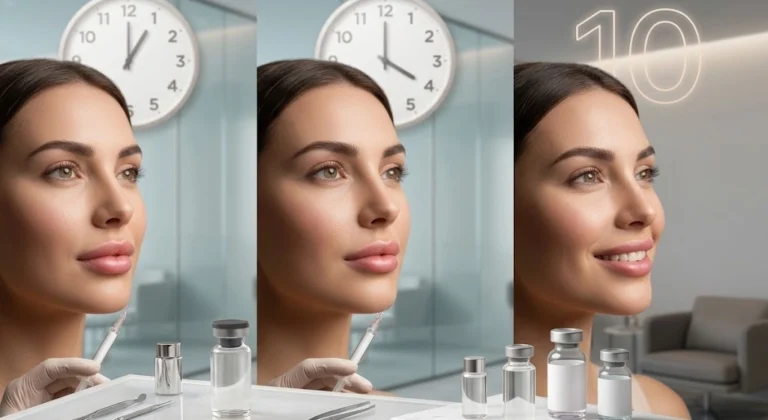
If you want to replace a dissolved filling, you should not rush. For the enzyme in the tissue to be completely removed, the edema to subside and the skin to recover at least 10-14 days should be waited. At the end of this period, with the right planning, a much more natural and aesthetic application can be made from scratch.
About filling complications and management FDA and dermatology authorities emphasize the importance of the safe use of Hyaluronidase.

Safe Revision and Repair in our Clinic in Kadikoy
Kadikoy‘In our clinic in Istanbul, we apply “Revision Protocols” to correct filling procedures that were performed in other centers and made you unhappy. Our aim is not only to dissolve the filler, but to give you the look of your dreams by respecting the natural anatomy of your face. An incorrect procedure is not your fate; you can always turn a clean page with the right specialist.
How Is Hyaluronidase Administered?
The procedure involves injecting small amounts of the hyaluronidase enzyme into the area containing the filler to be dissolved. The enzyme breaks down the molecular bonds of hyaluronic acid, causing the filler to dissolve.
It is standard practice to perform an allergy test before the procedure. The enzyme may cause a reaction in people with a bee sting allergy and, although rare, in some other individuals; therefore, the test should not be skipped.
How Long Does the Filler Dissolution Process Take?
The injection itself takes just a few minutes. The enzyme acts quickly: most of the dissolution occurs within the first 24–48 hours.
In some cases, a single session is not enough. Fillers that have been in place for a long time, have a thick consistency, or have a high cross-linking ratio may require a second session. This is not a failure; it is due to the product’s composition.
What Are the Side Effects of Filler Dissolution?
The most common side effects are temporary: swelling, redness, and mild tenderness at the application site. These usually subside within a few days.
An important point is that the enzyme can affect not only the injected filler but also some of the natural hyaluronic acid in that area. This effect is temporary; the body replenishes its own hyaluronic acid. Nevertheless, if a new filler treatment is planned for the area, a waiting period is observed to allow the tissue to heal.
When Can a New Filler Be Applied After Dissolution?
This is a decision that should not be rushed. You should wait for the tissue to heal and for the enzyme's effects to completely wear off; applying the treatment too soon may cause the new filler to dissolve faster than expected.
The waiting period varies depending on the individual and the amount melted. Therefore, it is best to leave the schedule to the discretion of the treating physician rather than following a general rule.
Application
Filling Application
You can have this procedure done at Dr. Melis Ülger’s office in Kadıköy Caddebostan.
Frequently Asked Questions
Can the filling be removed?
Yes. Unlike permanent fillers, hyaluronic acid-based fillers have a "reversal" option; the procedure can be reversed if you are not satisfied with the results or if a medical complication arises.
What is hyaluronidase?
It is an enzyme that occurs naturally in the body and breaks down hyaluronic acid molecules. When this synthetically produced enzyme is injected into the area, it dissolves the cross-linked filler gel.
How is dissolved filler eliminated from the body?
The enzyme breaks down the filler gel into water and carbon dioxide. The body then eliminates these liquid byproducts through natural metabolic processes.
Is it used solely for aesthetic purposes?
No. In addition to addressing aesthetic concerns, it is a procedure used to preserve tissue health in emergency medical conditions such as vascular occlusion.

You may also like
-

How Long Does Bruising Last After Chin Filler?
Why does bruising happen after chin filler, and how many days does it take to fade? The day-by-day colour changes, ways to reduce it and warning signs. Write to us if you have questions. -

Does Lip Filler Hurt? Pain Management and the Process
Does lip filler hurt, and how much pain is there really? Read about numbing cream, lidocaine-containing products and cannulas, and book your appointment in Caddebostan. -
When Do Lip Fillers Settle? The Process, Day by Day
When do lip fillers settle in, and how many days does the swelling take to go away? Dr. Melis Ülger explains the daily timeline from the first 24 hours through the second week.
 Türkçe
 English