









Lip Botox (Lip Flip): 2026 Plump Lips Without Fillers
04/08/2026
Treatment for Enlarged Pores: 2026 Permanent Solutions
05/08/2026What Causes Lumps in Lip Fillers, and Do They Go Away?
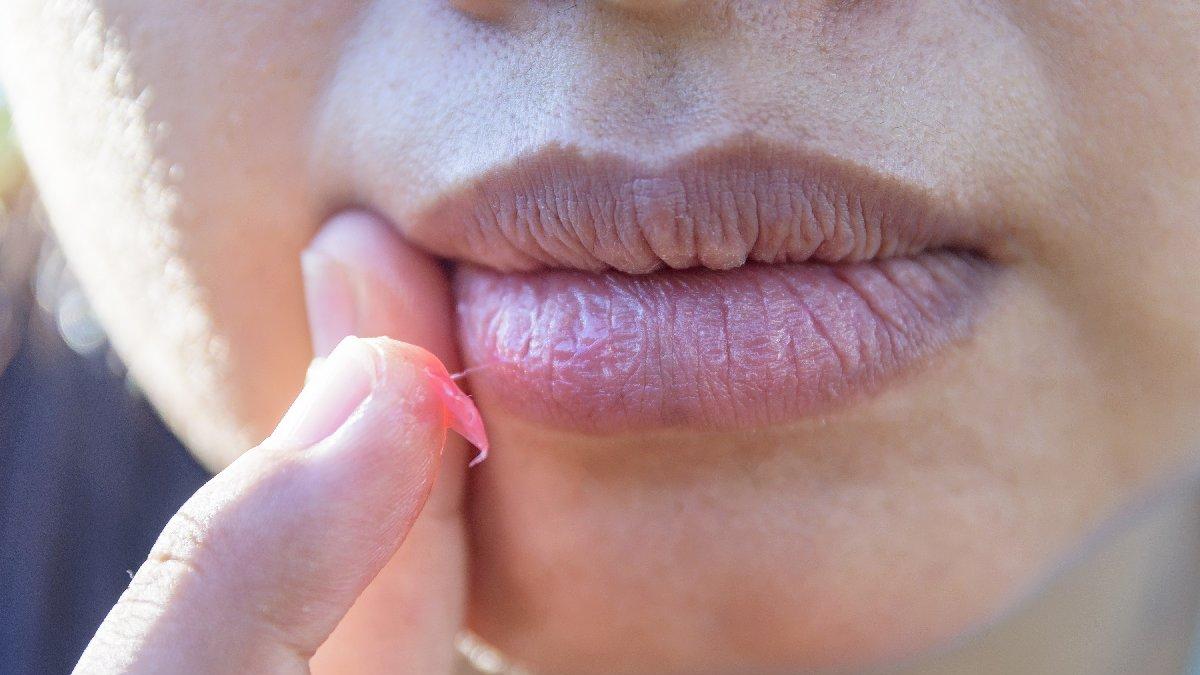
If you felt a slight tightness in your lip after the procedure and were worried, you're not alone. Lip fillers clumping, a condition in which the gel applied to the lips accumulates at specific points, leaving small, firm lumps that can be felt by touch. Most of the time, this is temporary swelling during the first few days; sometimes, however, it requires actual correction.
In this article, I’ll explain why stiffness occurs, which table is considered normal and which is considered risky, and how it’s resolved. The general functioning of the filler Lip Filler Guide I summarized it in my post; here, the focus is entirely on stiffness and nodules.
Highlights
- Lip fillers Most cases of clumping are related to the temporary payment made within the first two weeks.
- True late-stage nodules are a rarer condition observed in hyaluronic acid fillers at a rate of less than %1.
- Most cases of early firmness that can be felt by touch resolve with proper massage and over time.
- If lumps do not go away after two weeks, or if they grow or become red, it is essential to see a doctor.
Causes of Lumps in Lip Fillers
My clients tend to attribute clumping to a single cause, but there are usually several factors at play. Understanding the causes makes it easier to distinguish when it’s best to wait and when intervention is warranted. The five main causes are as follows.
First is swelling. The lips are a tissue with a dense network of blood vessels; they retain fluid after the injection, and the entire area feels firm during the first few days. Second is the technique; when the gel is injected into a layer very close to the surface, it can leave small lumps that are palpable. The third reason is product selection; high-cross-linked, high-density gels are more noticeable in thin tissue like the lips.
The fourth cause is migration. Over time, the gel shifts from its original location, accumulates outside the border, and forms a hard mass at a single point. The fifth cause is a late-stage inflammatory response; the immune system may detect the gel weeks later and trigger a reaction around it. This last group is rare but requires close monitoring.
Is It Swelling or a Persistent Lump?
My clients often say, “lip fillers Patients often come in saying, ”It’s formed a lump,” but what I feel during the exam is usually swelling that hasn’t subsided yet. It’s normal for the lip to feel hard and bumpy in the early days, because the gel draws water from the surrounding tissue. This temporary hardness should not be confused with a permanent defect.
Some clients After the filling This describes small swellings that look like blisters or fluid-filled sacs. These are usually swellings caused by the gel retaining water, which soften within a few days. A true lump, on the other hand, does not shrink over time and remains in a single spot with a distinct border.
The most practical way to distinguish between the two is by considering time and sensation. The table below compares the differences between a temporary swelling and a permanent nodule side by side.
| Symptom | Normal edema (temporary) | True nodule (permanent) |
|---|---|---|
| Introduction | Immediately after the procedure | Weeks or months later |
| Duration | 1–2 weeks | It won't go away on its own |
| His | Mild and widespread | Hard, limited, single point |
| Approach | Waiting and a gentle massage | Medical Evaluation |
When Is Lip Tightness Normal?
Stiffness in the lips is to be expected during the first two weeks after the procedure and is not, in itself, a cause for concern. Until the gel settles into the tissue, the lips may feel tight, full, and slightly bumpy in places. It is also common to notice that the stiffness increases in the mornings during this period, as fluid accumulates overnight.
I look for a few signs to determine whether the stiffness is normal. If it subsides over time, isn’t accompanied by pain or redness, and is spread across the entire lip, there’s no cause for concern. For those who are curious about the swelling process day by day Swelling after lip fillers You can use the calendar in my post.
On the contrary, if the induration persists beyond the second week, I would like to evaluate it. An induration that is localized to a single point, is becoming increasingly pronounced, or is changing color is no longer classified as edema.
What Is a Filler Nodule?
A filler nodule is a small, firm mass that can be clearly felt by hand, resulting from the gel clumping within the tissue or the development of a tissue reaction around it. The early-type nodule is typically a technique-related accumulation of gel. The late-type nodule, on the other hand, develops when an immune response kicks in months later and may be inflammatory.
Hyaluronic acid According to the literature, this gel can bind approximately 1,000 times its own weight in water; this water-retention property explains the temporary firmness observed in the early days. The persistent nodule, however, is not related to water but rather to the gel’s distribution or the tissue’s response.
Looking at the numbers, the picture is actually reassuring. International dermatology reviews report that the incidence of late-stage nodules associated with hyaluronic acid fillers is less than %1. In other words, when the procedure is performed correctly by a qualified professional, the actual risk of nodules is quite low.
Contact us
Create Your Appointment
Do Clumps Go Away on Their Own?
Most early-stage lumps resolve on their own, as the underlying cause is temporary swelling. As the body absorbs the excess fluid, the lip softens and the irregularities disappear. That’s why my first response to a newly administered filler is usually to wait.
If it is a true nodule, the situation is different; it does not resolve on its own. Accumulations of a mechanical nature can be resolved with pressure and massage, but chronic inflammatory nodules require medical treatment. I prefer to make this distinction through a physical examination rather than by visual inspection alone.
In short, the answer to the question “Will it go away if I wait?” depends on the type and duration of the stiffness. Two weeks is a practical benchmark; it’s a good idea to take any stiffness that persists beyond that time seriously.
Does Massage Relieve Clumping?
Gentle massage is a simple method that works for early-stage lumps. Since the gel hasn’t fully settled into the tissue yet, applying light pressure can help it spread more evenly. However, I’d like you to perform the massage not randomly, but exactly as I’ve described and at the specified times.
I generally don’t recommend applying firm pressure in the first few days, because the tissue is already sensitive. After a few days, use a clean fingertip to apply gentle, circular motions to the hardened area. The goal is to spread the gel, not to massage it in; excessive pressure can cause bruising rather than providing relief.
Massage doesn’t resolve every lump. If there’s redness, pain, or enlargement, I’d advise you to stop the massage and call me, because in that case, the treatment goes beyond massage.
How Do You Prevent Clumping?
The solution depends on the cause of the stiffness; there is no one-size-fits-all approach. For tension-related knots, time and cold compresses are often sufficient. For muscle tension, controlled massage and, if necessary, follow-up over the course of a few weeks are recommended.
If you have a persistent and bothersome nodule, the most effective approach is to dissolve it using a targeted gel. Hyaluronic acid-based fillers hyaluronidase can be dissolved using an enzyme; this method in detail lip filler melting I explained this in my article. In the case of chronic inflammatory nodules, however, the approach is different, and additional medical treatment is sometimes required.
The key is to choose a solution based on careful consideration, not panic. Not every stiffness needs to be resolved; often, good timing and patience can correct the issue without straining the tissue.
Preventing Clumping: The Right Doctor and Technique
The key to minimizing the risk of lumps is the application itself. When the right amount of gel is applied to the correct layer and tailored to the anatomy of the lips, technique-related firmness is largely prevented. That’s why I often remind people that the hand applying the product is just as crucial as the product itself.
The second important point is product selection. For a delicate and mobile tissue like the lips, I prefer an approved filler with a consistency suitable for the area rather than a thick gel. The protocol I follow is lip fillers I shared it on my page.
Finally, post-procedure care makes all the difference. Avoiding hot environments during the first few days, refraining from touching the area, and performing the massage I recommended will reduce the likelihood of stiffness. If you’d like me to examine the stiffness on your lip in person and determine the best course of action together, Communication You can schedule an appointment on my page.
Frequently Asked Questions
How many days does it take for lip filler lumps to go away?
Early hardening associated with the implant usually softens on its own within the first 1–2 weeks. If the hardening persists beyond this period, a doctor’s evaluation is necessary. It is best to wait for the tissue to settle rather than rush the process.
How do you massage a chapped lip?
After the first few days have passed, use a clean fingertip to apply gentle, circular motions to the hardened area. The goal is to spread the gel, not to press down or rub it in. If redness or pain occurs, stop the massage and consult a doctor.
Is filler clumping dangerous?
Most early-stage lumps are temporary and harmless. The ones that require the most attention are those that appear later, are painful, or become red. If these symptoms are present, you should seek an evaluation without delay.
Is it necessary to melt the filler to prevent clumping?
No, not every lump requires dissolution. Edema and technical accumulations usually resolve on their own with time and massage. Dissolution is a targeted solution recommended only for persistent and bothersome nodules.
Which filler causes less clumping?
Hyaluronic acid fillers with a consistency suitable for lip tissue and that are FDA-approved distribute more evenly in delicate areas. The correct application technique and product selection are equally critical. The appropriate product is selected in consultation with the patient during the initial consultation.
Will the clumping happen again?

Appointment & Contact
Contact our clinic for reliable and personalized planning in medical aesthetic applications.
Write to Us
Let's Create Your Appointment Now
Application
Filling Application
You can have this procedure done at Dr. Melis Ülger’s office in Kadıköy Caddebostan.
Sources
Related Articles
 English