









When Does the Effect of Botox Start and How Long Does It Last? Managing the Youth Calendar
30/12/2025
What are the Benefits of Dermal Fillers for the Skin? The Secret of Youth and Vitality
05/01/2026Highlights
- Rosacea is different from sensitive skin; it is a condition that requires monitoring.
- The vascular mechanism underlying the redness is explained.
- Managing triggers is an integral part of treatment.
- These volumes list the skincare practices that should be avoided.

Frequently Asked Questions
What is rosacea?
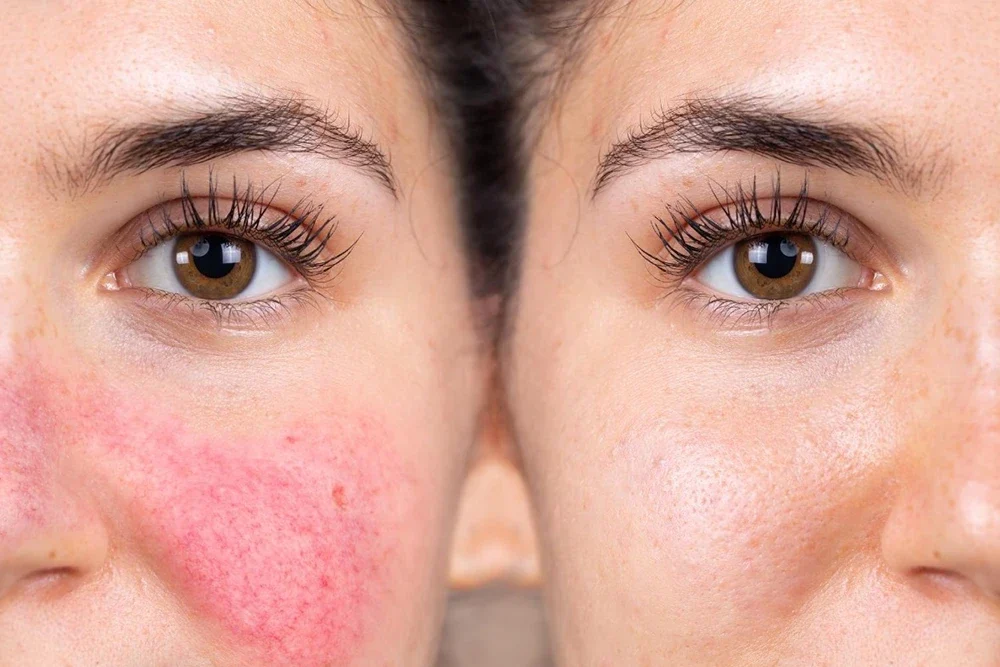
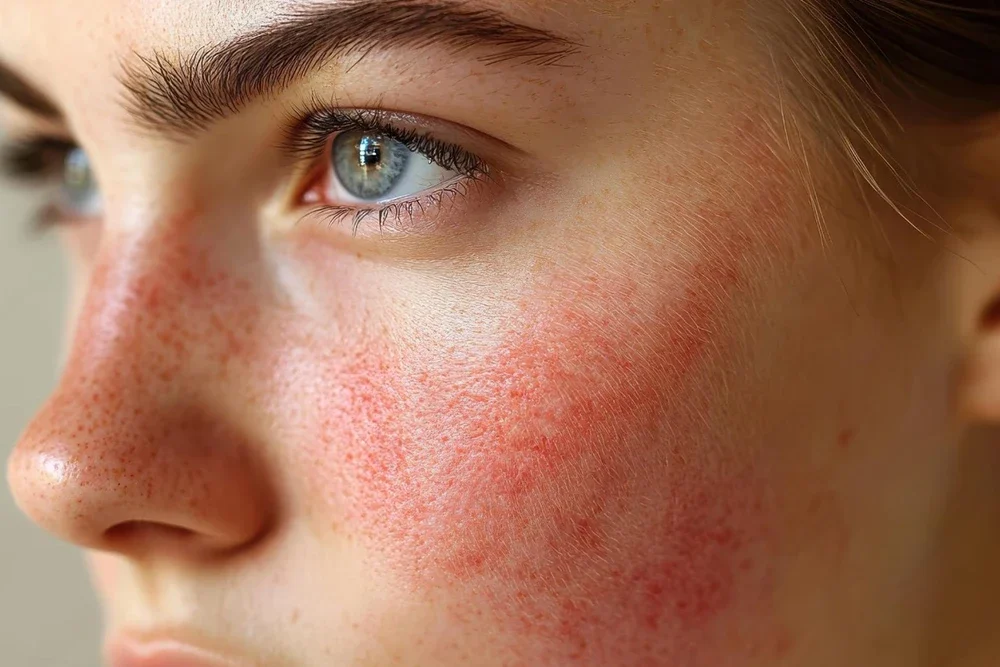
It is an inflammatory disease that affects the central part of the face (nose, cheeks, forehead, and chin) and occurs in episodes. It typically begins after the age of 30 in people with fair skin.
Just a rash?
No. In later stages, it can lead to acne-like bumps (acne rosacea), eye involvement, and thickening of the nasal tissue (rhinophyma). For this reason, early intervention is important.
What is the mechanism behind flushing?
In skin affected by rosacea, blood vessels are highly reactive. While dilated blood vessels in normal skin return to their normal size, in rosacea, because elasticity is impaired, the vessels remain dilated near the skin’s surface, resulting in persistent redness.
Does rosacea go away completely?
The article makes it clear: even if it cannot be completely "eradicated," it can be brought under control using modern methods, and its symptoms can be suppressed for a long time.
 English