







How Many Sessions Are Required for the Golden Needle Treatment? The 3-4 Session Rule
30/07/2026
Botox for the Eye Area: Benefits and Risks in 2026
31/07/2026How Is Laser Spot Treatment Performed, and Who Is It Suitable For?
If you’re looking into laser spot treatment for a mark on the back of your hand, your cheek, or your forehead that has darkened over the years, you probably have one question on your mind: Does it really work? I hear this question almost every week in my office. My short answer is this: when the right laser is applied to the right mark, the pigment lightens noticeably—but it’s not a magic button.
Laser spot treatment is a procedure that uses intense pulses of light to break down excess melanin pigment within the skin, allowing the body to eliminate it naturally. In this article, we’ll discuss each of these topics in detail: how lasers affect dark spots, which devices are best for which types of dark spots, whether the procedure is safe, and what factors influence the cost of laser dark spot treatment.
Let me be honest from the start: no laser treatment can guarantee that a blemish will never return. The outcome depends on the type of blemish, your skin tone, and your sun protection afterward. A treatment that begins with realistic expectations is already halfway there.
Highlights
- Laser spot treatment is a procedure that uses intense light energy to break down excess melanin in the skin, thereby lightening the appearance of the spot.
- Different lasers, such as thulium and Q-switched lasers, target different types of spots; a single device is not suitable for every spot.
- While superficial sunspots often fade in 1–3 sessions, stubborn spots such as melasma require a more cautious and long-term approach.
- A laser that is improperly adjusted for dark skin tones can darken the spot instead of lightening it; therefore, the device settings and the doctor’s experience are critical.
- The secret to long-lasting results isn't the treatment itself, but the regular sun protection you maintain afterward.
How Does Laser Spot Treatment Work?
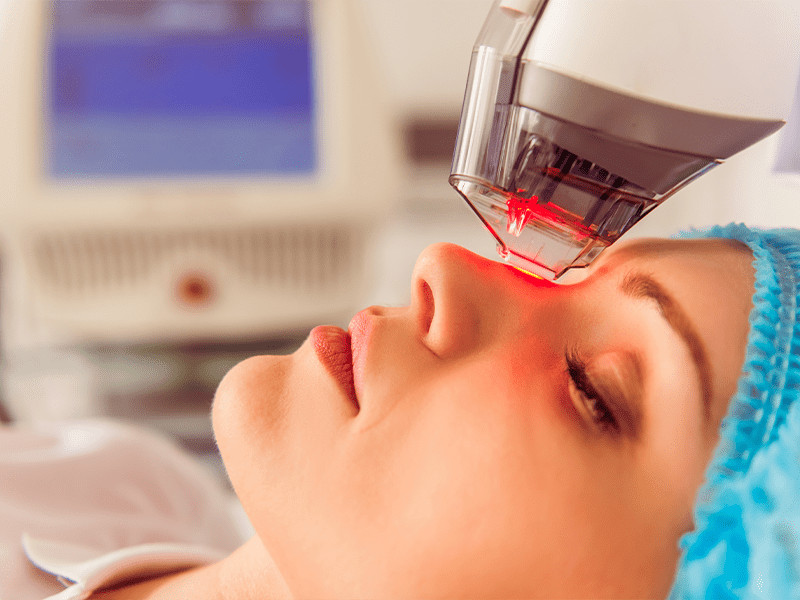
Laser spot treatment is essentially a process of selective targeting. The light emitted by the device at a specific wavelength is absorbed by the dark melanin pigment within the skin, and the pigment is broken down into small pieces by the heat. Since the surrounding healthy tissue does not absorb this light to a significant degree, the treatment targets only the spot.
The body’s own immune system then gradually breaks down and removes the fragmented pigment. That is why the mark fades not immediately after the procedure, but over the following days and weeks. Since the skin takes time to regenerate, you need to wait patiently for the results.
While some lasers target the upper layer of the skin, others penetrate deeper to reach the pigment. Which layer is targeted depends on where the blemish is located on the skin. Choosing the correct depth determines half the outcome from the start.
How Does Laser Treatment Affect Skin Discolorations?
When a laser is applied to a spot, it creates a small, controlled stimulation on the skin’s surface, which triggers the skin’s repair process. During this repair process, both the pigment is removed and the production of new collagen is stimulated. In other words, a proper treatment not only lightens the spot but also rejuvenates the skin tissue.
The effectiveness of the treatment depends on how superficial the stain is. Fresh marks close to the skin’s surface respond quickly to the light. Pigment that has accumulated over the years and settled deep into the skin, however, requires more sessions.
For example, the response to superficial lesions associated with summer is generally rapid; this condition in detail sunspot treatment I explained this in my article. In cases of hormone-induced and recurrent pigmentation, however, we use laser treatment much more sparingly.
How Does Thulium Laser Work for Pigment Spot Treatment?
The thulium laser is one of my top choices for treating pigmentation because it targets melanin in the upper layer of the skin without causing peeling. The device creates thousands of microscopic channels in the skin and accelerates the shedding of pigment-laden cells. Aside from mild redness lasting a few hours after the procedure, there is generally no noticeable scarring.
The biggest advantages of this technology are comfort and a short recovery time. Since the skin’s protective outer layer is largely preserved, you won’t have to take a long break from your social life. How the session proceeds step by step Baby Face Laser I explained it step by step in my article.
Thulium is particularly effective for superficial sunspots and general uneven skin tone. However, it may not be sufficient on its own for deeper or darker pigmentation; in such cases, we use a different type of laser.
Which Laser Is Best for Which Type of Mark?
What we refer to as a "spot" is not a single condition; sunspots, age spots, melasma, and post-inflammatory hyperpigmentation all behave differently. For this reason, the choice of laser also depends on the type of spot. An incorrect match can lead to disappointing results, even with the best device.
Thulium-based lasers are the treatment of choice for superficial and light-brown spots. For sharply defined, dark, and spot-shaped lesions, Q-switched or picosecond lasers break down the pigment more precisely. For stubborn, hormone-related lesions such as melasma, we prefer low-energy and gentle settings.
Why melasma requires special attention melasma treatment I went into detail in my article. The table below summarizes the types of lasers I use most frequently and the types of spots they are most effective for.
| Laser Type | The Stain It Targets Best | A Typical Session | Recovery |
|---|---|---|---|
| Thulium (Baby Face) | Superficial sunspots and uneven skin tone | 3–5 sessions | A few hours of pinkness |
| Q-switched | Sharp, dark, dot-like spots | 2–4 sessions | Mild peeling for 1–3 days |
| Picosecond | Deep-seated, stubborn pigment | 3-6 sessions | Redness for 1–2 days |
| Fractional (fine adjustment) | A combination of staining and texture issues | It depends on the skin type | 2–4 days of peeling |
Why is spot treatment scheduled for the fall and winter? Why do sunspots fade more easily in the winter? I explained it in my article.
Contact us
Create Your Appointment
Is Laser Skin Resurfacing Safe?
The honest answer to the question “Is laser treatment safe?” is this: it is considered safe when performed with the right device, the right settings, and by an experienced physician, but it is not risk-free. The most common temporary side effects are redness, mild swelling, and peeling. These usually resolve on their own within a few days.
The key point to keep in mind is skin color. On darker skin tones, a laser that is not properly adjusted can irritate the skin and cause it to darken rather than lighten the pigment. The American Academy of Dermatology (American Academy of Dermatology), en az SPF 30 değerinde geniş spektrumlu bir güneş koruyucunun UVB ışınlarının yaklaşık %97’sini süzdüğünü belirtir ve tedavi sonrası korumayı sonucun belkemiği sayar.
The same organization emphasizes that the vast majority of brown skin spots are caused by sun-induced photoaging. In other words, even if you lighten the spot with a laser, the pigment will return to the same area if you stop using sun protection. A safe outcome depends as much on your habits after the procedure as on the procedure itself.
Who Is a Good Candidate for Laser Spot Treatment, and Who Isn't?
The best candidates for laser spot treatment are individuals with superficial, sun-induced spots and fair to medium skin tones. In these skin types, the pigment responds well to the light, and the risk of side effects is low. However, every patient’s skin is evaluated through a skin analysis before the procedure.
In some cases, however, I postpone laser treatment or do not recommend it at all. These include active skin infections, fresh sunburn, tanned skin, and certain medications that cause photosensitivity. During pregnancy, we also typically postpone most pigmentation treatments until after childbirth.
Any spot that changes in color, shape, or size must be shown to a doctor before treatment. This is because not every dark mark is simply a spot; in rare cases, it may be a sign of a skin health issue. Failing to make this distinction can turn a cosmetic concern into a serious problem.
What Should You Keep in Mind Before and After a Session?
Keeping your skin out of the sun for the two weeks before your session is the most important step in preparing for the procedure. Applying laser treatment to tanned skin increases the risk of side effects. For this reason, I ask that you avoid tanning beds and intense sun exposure before your appointment.
In the first few days after the procedure, your skin will be sensitive; a gentle cleanser and plenty of moisturizer will help soothe it during this time. If scabs form, never pick at them; it’s essential to let them fall off on their own to prevent scarring. Avoiding hot showers, saunas, and strenuous exercise for a few days will help the healing process.
The most critical rule, however, is sun protection. Newly exposed skin is more vulnerable to UV rays than before, and if left unprotected, pigmentation will quickly return. That’s why I consider sunscreen an integral part of the treatment.
What Factors Determine the Cost of Laser Spot Treatment?
The cost of laser spot treatment cannot be stated as a single figure, because every spot and every skin type requires a different treatment plan. The first factor determining the price is the number of sessions; while a superficial spot may be cleared in just a few sessions, widespread and deep pigmentation requires a longer course of treatment. The type of laser used and the size of the treated area also affect the total cost.
The second determining factor is the nature of the facility where the procedure is performed. A procedure performed under a doctor’s supervision in a medical setting differs from low-cost options offered at unregulated facilities. A low-cost but improperly calibrated laser can cause skin darkening that is much more expensive to correct.
That’s why we always perform a skin analysis before discussing pricing. Once we’ve determined the appropriate number of sessions and treatment method for you, we’ll create a transparent plan. The right question isn’t “Where is it cheapest?” but “What’s the best treatment for my skin condition?”.
A Home Routine That Ensures Lasting Results
The key to maintaining the clarity achieved at the clinic is the daily skincare routine you follow at home. Applying broad-spectrum sunscreen in the morning, reapplying it throughout the day, and seeking shade with a hat when needed are the best ways to care for skin that has been lightened with laser treatment. If you skip these steps, pigmentation will quietly return.
As part of your evening routine, it’s important to use active ingredients that regulate pigment production in the amounts prescribed by your doctor. Using too much product can irritate the skin, and irritation leads to dark spots; that’s why it’s wiser to use them in moderation. A noticeable difference usually becomes apparent within a few weeks, so expecting results in just a few days can be misleading.
Dealing with skin discoloration can be exhausting at times, but with the right laser and a realistic plan, it’s possible to significantly even out your skin tone. To help you choose the best laser for your needs, I’d like to examine your skin first. The advanced laser system we use at the clinic baby face ultra You can check it out on the page to see if you qualify Communication We can talk by scheduling an appointment on their website.
Just make sure you don't redraw the mark you made while it's in the sun.
Last updated: July 30, 2026
This content has been reviewed by Dr. Melis Ülger, a medical aesthetics specialist. Dr. Melis Ülger is a medical aesthetics specialist who develops personalized treatment plans for laser-based skin rejuvenation and spot removal at her practice in Caddebostan.
Frequently Asked Questions
Does laser spot treatment hurt?
During the procedure, you’ll generally feel a brief sensation of warmth, similar to being pricked by a needle, and most people find this quite tolerable. We apply a numbing cream beforehand to sensitive areas. If you have a low pain threshold, we’ll adjust the procedure accordingly.
Will there be any scarring after laser skin lightening?
With the correct settings and the right choice of skin type, no permanent scarring is expected; the scab that forms will fall off on its own. The risk of scarring increases most when the scab is picked at or when the skin is not protected from the sun. For this reason, post-treatment care is just as important as the procedure itself.
How many sessions does it take to see results?
The number of sessions varies depending on the depth and type of the spot, as well as your skin type. While superficial spots lighten noticeably in just a few sessions, deeper pigmentation requires a longer treatment plan. The exact number of sessions will be determined after an in-person skin analysis.
Can laser treatment for skin spots be performed during the summer months?
Some lasers that do not cause skin peeling can be used during the summer months, provided that strong sun protection is used. However, since the risk increases on tanned skin, your doctor may postpone the procedure. Sunscreen is required year-round in any case.
When can I apply makeup after a laser treatment?
With non-ablative treatments, most people can resume wearing light makeup the next day. With treatments that cause peeling, however, you’ll need to wait until your skin has fully healed. We’ll provide you with a personalized estimate of the exact recovery time based on the type of laser used.
Will a spot treated with a laser come back?

Appointment & Contact
Contact our clinic for reliable and personalized planning in medical aesthetic applications.
Write to Us
Let's Create Your Appointment Now
Application
Scarlet X (Golden Needle) App
You can have this procedure done at Dr. Melis Ülger’s office in Kadıköy Caddebostan.
Related Articles

 English