


How Long Does Dermal Filler Last? A Realistic Guide

Highlights
- The reasons why a standard duration cannot be specified for permanence are explained.
- Average durations for different regions are considered separately.
- Researchers are evaluating whether regular use affects retention.
- It explains how the melting process of the filling works.
Why is there no "standard" answer? Main Factors Affecting Persistence
It is not a medically correct and ethical approach to give a clear and valid answer such as “it lasts X months” for the permanence of dermal fillers. Because the duration of hyaluronic acid-based fillers in the body depends on many different interrelated factors. A filler that is permanent for 18 months in one person may dissolve in 9-12 months in another person. Understanding the main factors that make this difference allows you to better manage your own process.

1. Type and Technology of Filling Used (Cross-Links)
The most fundamental factor determining permanence is the molecular structure of the filler itself. Hyaluronic acid (HA) fillers are produced by linking these molecules together with “cross-links”. These cross-links make the filler more resistant to breakdown by the body's natural enzymes (hyaluronidase). The higher the cross-link ratio and the more advanced the technology, the longer the filler will last.
For example, dense, hard and highly cross-linked fillers designed to mimic bony structures such as the jawline or cheekbone last much longer than more flexible and less cross-linked fillers designed for soft and mobile areas such as the lips.
2. Application Area (Mobility and Blood Supply)
The anatomical site where the filler is injected has a direct impact on the retention time. The rule is simple: The more mobile an area is and the more blood supply it has, the faster the filler tends to dissolve in that area.
- High Mobility Zones: The lips (due to speaking, eating, laughing) and around the mouth are the most mobile areas of the face. Fillers in these areas are metabolized faster than in less mobile areas.
- Less Mobile Regions: Fillers applied to more stable and less moving areas such as under the eyes, cheeks and jawline usually last much longer.
3. Individual Characteristics (Metabolic Rate and Lifestyle)
Every individual has a different metabolism, the rate at which their body processes and breaks down substances. This is as personal as a fingerprint.
- Metabolic Rate: People with a high overall metabolic rate (for example, professional athletes or those who lose weight very quickly) tend to break down the filler faster, just like everything else.
- Lifestyle Factors such as smoking, excessive and regular alcohol consumption can increase oxidative stress in the body, causing hyaluronic acid to break down faster. Likewise, regular exposure to extremely hot environments (sauna, Turkish bath) can also accelerate this process.
- Sun Protection: Intense sun exposure can shorten the life of the filler as it damages the collagen and hyaluronic acid structure of the skin.
4. Amount of Filling Applied and Technique
The amount of filler applied to an area also plays a role in permanence. Generally, compared to first-time applications, regular and repeated applications to the same area are observed to increase permanence. In addition, injecting the filler into the correct anatomical plan (for example, on the bone or deep fat tissue) may provide longer permanence than superficial applications.
Let's Create Your Appointment Now
Leave your name and phone number and we will call you to discuss the right treatment and an appointment time.
Reach us by phone+90 532 336 52 00Average Persistence Periods for Different Regions (Hyaluronic Acid Based)
Taking all the above factors into account, the generally accepted average retention times for different regions are as follows:
- Lip Fillers 9 - 12 Months
- Under Eye Light Filler: 12 - 18 Months (One of the longest stays due to the inactivity of the region)
- Cheeks, Chin, and Jawline Fillerwater: 12 - 24 Months (Since dense fillers applied on the bone are generally used)
- Nasolabial and Marionette Lines: 9 - 15 Months
Do Regular Applications Increase Permanence?
Conclusion. Clinical observations show that in patients who regularly have fillers, “touch-up” sessions performed without waiting for the filler to dissolve completely increase the permanence in the area. One reason for this is that the injected hyaluronic acid also triggers the body's own collagen production (neocollagenesis). Each injection initiates a process of repair and reconstruction in the area. In this way, even if the filler dissolves, the skin becomes stronger and fuller than before.
How Does the Filling Melting Process Work?
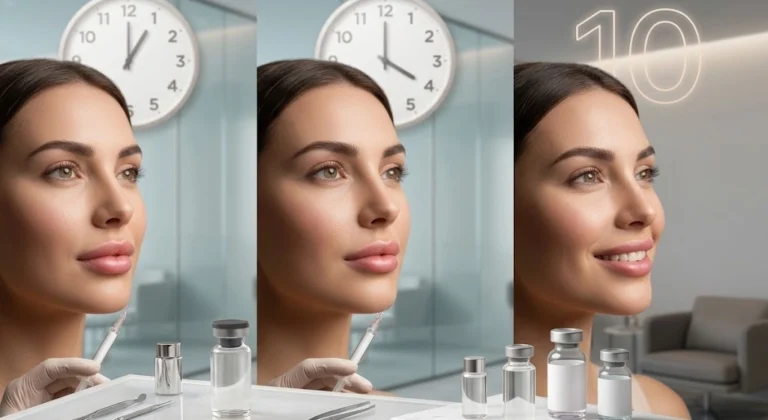
There is no such thing as the filling suddenly “disappearing” overnight. The melting process starts very slowly and gradually from the day of application. The body's own hyaluronidase enzymes slowly break down the filler molecules. This is such a slow process that it often goes unnoticed. Usually, when patients look at their old photos at the 9th or 12th month, they realize the difference and feel the need for a “refresh”.
About safe filling practices and the management of these processes, Agencies such as the US Food and Drug Administration (FDA) also provides guidelines to inform patients that these treatments are temporary and should be administered with safe products.

Realistic Expectations and Planning at our Clinic in Kadikoy
Kadikoy‘At our clinic in dermal fillers Before the procedure, I have a detailed consultation with my patient. In this meeting, I analyze not only what you want, but also your lifestyle, metabolic structure and expectations. I transparently explain to you the most realistic permanence period according to the type of filler we will choose and your facial structure. Our aim is not to make promises we cannot keep, but to plan the most natural and long-lasting result for you in the light of scientific data.
Application
Filling Application
You can have this procedure done at Dr. Melis Ülger’s office in Kadıköy Caddebostan.
Frequently Asked Questions
Why can't a specific timeframe be given?
The duration of hyaluronic acid fillers in the body depends on many interrelated factors. A filler that lasts 18 months in one person may dissolve in 9–12 months in another.
What is the purpose of a cross-link?
HA molecules are linked together by cross-links. These bonds increase the filler’s resistance to breakdown by the body’s natural enzymes; the higher the ratio, the longer the duration of the results.
Is the same product used in every region?
No. Dense, highly cross-linked products are used in areas that mimic bone structure, such as the jawline or cheekbones; more flexible products are used in soft, mobile areas, such as the lips.
How does the region affect longevity?
The rule is simple: the more active and well-perfused an area is, the faster the filler dissolves there.

You may also like
-

How Long Does Bruising Last After Chin Filler?
Why does bruising happen after chin filler, and how many days does it take to fade? The day-by-day colour changes, ways to reduce it and warning signs. Write to us if you have questions. -

Does Lip Filler Hurt? Pain Management and the Process
Does lip filler hurt, and how much pain is there really? Read about numbing cream, lidocaine-containing products and cannulas, and book your appointment in Caddebostan. -
When Do Lip Fillers Settle? The Process, Day by Day
When do lip fillers settle in, and how many days does the swelling take to go away? Dr. Melis Ülger explains the daily timeline from the first 24 hours through the second week.
 Türkçe
 English