










Neck Botox and Nefertiti Lift: A Guide for 2026
07/08/2026
What Is a Collagen Injection? The 2026 Guide to Skin Rejuvenation
10/08/2026Does Lip Filler Hurt? Is the Anesthesia Sufficient?
The phrase I hear most often before an appointment is: “Doctor, lip fillers ”Will it hurt? Will it really hurt that much?" My short answer is reassuring. Lip fillers pain, is a temporary discomfort felt when the needle enters the lip tissue; for most people, it ranges from mild to moderate. With proper anesthesia, this sensation is largely controlled.
In this article, I’ll describe the actual level of pain without exaggerating it. The general flow of the procedure Lip Filler Guide I’ve summarized it in my article; here, the focus is entirely on pain, anesthesia, and comfort.
Highlights
- Lip fillers For most clients, the answer to the question “Does it hurt?” is “a little and only briefly.”.
- Most modern hyaluronic acid fillers contain approximately %0.3 lidocaine, which numbs the area during the procedure.
- Anesthetic cream applied 20–30 minutes before the procedure significantly reduces the sensation of the needle pricking the skin.
- Pain tolerance varies from person to person; menstruation, sleep deprivation, and anxiety can increase the perception of pain.
Does Lip Filler Hurt? What Do You Feel During the Procedure?
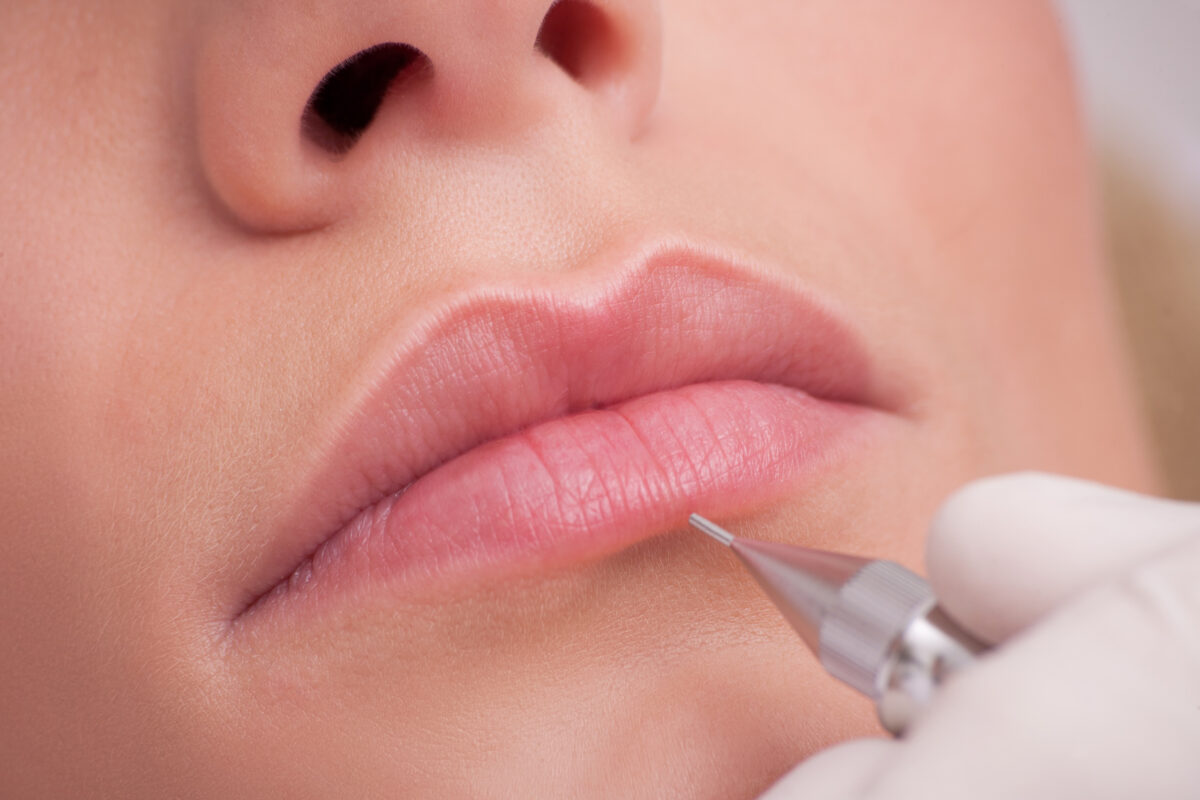
The honest answer is this: if you’re asking whether lip fillers hurt, yes, you’ll feel some sensation, but it’s not unbearable pain. Most of my patients describe the moment of the injection as “similar to having your eyebrows plucked—a brief pinch.” Once the anesthesia takes effect, this sensation fades into the background.
If I break the procedure down into stages, it becomes easier to describe the pain. At the initial entry point, there’s a slight pricking sensation; then, as the gel spreads, a feeling of fullness and pressure becomes more prominent. The main discomfort is usually this sensation of pressure, not a sharp pain.
The procedure is also quick. It takes an average of 15–20 minutes, and the needle remains in the lip for only a few seconds. In other words, the anxiety caused by the expectation that it will “hurt” is often more exhausting than the procedure itself.
Is Lip Filler Painful? How Much Does It Hurt?
To objectively address the question of whether lip fillers are painful, I use a pain scale. Without anesthesia, the initial injection is described as a 4–5 on a scale of 10; with a topical cream containing lidocaine, this level drops to 1–2 for most patients. In other words, the pain level associated with lip fillers is much lower than commonly believed.
The intensity of the pain also depends on the area. The edges of the lips and the corners of the mouth are more densely innervated, so sensitivity may be slightly higher in these areas. The central part of the lip, however, is generally more easily tolerated.
I also make a distinction between “pain” and “sensitivity.” The sensation during the procedure is brief; what’s really noticeable is the sensitivity to touch that lasts for a few days afterward. Not confusing the two helps keep expectations realistic.
Anesthetic Creams and Anesthesia Methods
The key factor determining comfort is the anesthesia plan. Anesthetic cream, is a topical product containing lidocaine or a lidocaine-prilocaine mixture that is applied to the lips in a thick layer 20–30 minutes before the procedure. Once the waiting period is over, the surface of the lips becomes numb and the sensation of the needle is reduced.
I use a few other methods in conjunction with the cream. The lidocaine in the filler gel numbs the area from the inside immediately after the initial injection. For patients with a very low pain threshold, a nerve block similar to those used in dentistry may be preferred.
We’ll decide together during the initial consultation which method is right for you. The table below compares the comfort methods I use most frequently.
| Method | How to Apply It | Contribution to comfort |
|---|---|---|
| Anesthetic cream (topical) | Apply to the lips 20–30 minutes before the procedure | Reduces the sensation of sinking on the surface |
| Lidocaine in the filling | It is already present in the gel | After the initial injection, it numbs the area |
| Nerve block (dental) | The regional nerve is numbed | Complete numbness in people with a low pain threshold |
| Cold application | Pre- and post-procedure ice gel | Relieves swelling and pain |
| Vibration / Distraction | Vibration in sync with the needle | It suppresses pain signals through the gate-control effect |
Is Pain-Free Lip Filler Possible?
Entirely pain-free lip filler This claim is not a medically accurate promise; some sensation remains in any procedure involving a needle. However, procedures that are completed “with almost no sensation” are real and quite common. The goal is not to eliminate pain entirely, but to reduce it to a tolerable level.
That’s why I recommend approaching places that promise “guaranteed pain relief” with caution. The right approach is to use methods that enhance comfort in a layered manner and to clarify expectations from the start. I don’t promise pain-free results, but, comfortable I prefer that word.
For clients with high anxiety, the technique alone isn’t the only thing that makes a difference. Slowing down the process, taking breaks, and explaining what I’m doing step by step also significantly reduce perceived pain.
Contact us
Create Your Appointment
Which Is More Comfortable: a Cannula or a Needle?
Fillers can be administered using a fine, sharp needle or a cannula with a small, rounded tip. Because the cannula is inserted through a single entry point and spreads the tissue apart rather than piercing it, it generally causes less discomfort and leaves fewer bruises. This is a significant advantage for clients who are sensitive to pain.
The needle has its place too; it delivers more precise results when working on fine details and sharp contours. In other words, the choice depends not only on comfort but also on the desired look.
In practice, I sometimes combine the two. Filling the body with a cannula and then defining the edges with a needle is an approach that balances both comfort and results.
Why Does the Pain Threshold Vary from Person to Person?
I perform the same procedure on two clients; one says, “I didn’t feel a thing,” while the other blinks. This is because the pain threshold is individual. Genetics, past experiences, and one’s mood on that particular day directly influence perception.
Timing also plays a role. The days immediately before your period and the first few days of your period can increase sensitivity; I might recommend postponing your appointment by a few days during this time. Lack of sleep, an empty stomach, and excessive caffeine can also heighten your perception of pain.
The impact of anxiety, however, is the most underestimated factor. A tense body perceives pain as more intense. That’s why breathing exercises and a calm environment are more effective than most medications.
How Long Does Post-Procedure Sensitivity Last?
As soon as the procedure is complete, the pain subsides significantly, but it is replaced by a few days of tenderness. During the first 24–48 hours, the lips may feel tender to the touch, have a slight throbbing sensation, and be swollen. These symptoms are a completely normal part of the healing process.
If you're curious about the day-to-day progression of the swelling and tenderness Swelling after lip fillers The schedule in my post should do the trick. A cold compress, sleeping with your head elevated, and avoiding touching the area will significantly shorten this period.
If you need a pain reliever, paracetamol is the preferred choice; I do not recommend aspirin for pain on the first day because of its blood-thinning effect. If the throbbing is gradually getting worse, intensifying in a single spot, or if the color changes, this is no longer normal sensitivity, and you should call me.
Tips for Reducing Lip Filler Pain
A little preparation really makes the day of the session go more smoothly. The simple steps below make a noticeable difference for most of my clients.
- Drink plenty of water the day before your appointment; well-hydrated tissue tolerates the procedure more easily.
- Avoid alcohol and unnecessary blood thinners for 48 hours before the procedure; this will help reduce bruising.
- Don't come on an empty stomach; low blood sugar can cause dizziness and increase pain sensitivity.
- Do not schedule your appointment during the first few days of your period.
- If you're anxious, please let me know; we can extend the anesthesia or take a break.
In short, managing the pain associated with lip fillers is largely a matter of planning. If you’d like to compare prices and procedure details, Lip Filler Prices You can also take a look at my article.
The Relationship Between Hyaluronic Acid and Pain
The ingredients in the gel I use also affect my comfort. Hyaluronic acid It is a molecule that occurs naturally in the skin, and because it can hold hundreds of times its own weight in water, it leaves the lips feeling soft and supple. Since it is not foreign to the body, it reduces the risk of reactions and inflammatory pain.
According to product information from filler manufacturers, most modern hyaluronic acid fillers contain lidocaine at a concentration of approximately %0.3. This additive numbs the area from the inside as the gel is injected into the lip, reducing the sensation immediately after the initial injection.
The protocol I followed and my product selection lip fillers I’ve provided detailed information on my services page. The right gel and anesthesia plan for you will be determined during your consultation.
Frequently Asked Questions
How long does a lip filler procedure take?
Excluding the waiting time for anesthesia, the procedure takes an average of 15–20 minutes. The time the needle remains in the lip is measured in seconds. The total appointment, including the waiting time for the cream, can take up to an hour.
How long before the procedure should the anesthetic cream be applied?
The topical cream is usually applied to the lip 20–30 minutes before the procedure. This time is needed for the lidocaine to penetrate the tissue and numb the surface. Allowing the cream to remain on for the recommended duration, rather than wiping it off early, increases comfort.
Does getting lip fillers during your period increase pain?
During the first few days of your period, you may experience increased body sensitivity and bloating. For this reason, it’s more comfortable to schedule your appointment for a time outside of those days. It’s not mandatory, but I recommend it if you have the option.
Can I take pain medication after the procedure?
If necessary, you may take a pain reliever containing acetaminophen. Aspirin and similar blood-thinning medications are not recommended because they increase the risk of bruising on the first day. Please let me know in advance about any medications you are taking.
Does a filling done with a cannula hurt less?
Since the cannula is inserted through a single entry point and spreads the tissue rather than piercing it, it causes less stinging and bruising in most people. However, for sharp contouring, a needle produces more precise results. The choice is based on both comfort and the desired look.
How many days does the pain from a filling last after the procedure?

Appointment & Contact
Contact our clinic for reliable and personalized planning in medical aesthetic applications.
Write to Us
Let's Create Your Appointment Now
Application
Filling Application
You can have this procedure done at Dr. Melis Ülger’s office in Kadıköy Caddebostan.
Sources
Related Articles
 English