









Hydrafacial Blackhead Removal: The 2026 Guide
29/08/2026
What Is Facial Mesotherapy? A 2026 Guide to Its Benefits
01/09/2026How Does Radiofrequency Skin Treatment Work?
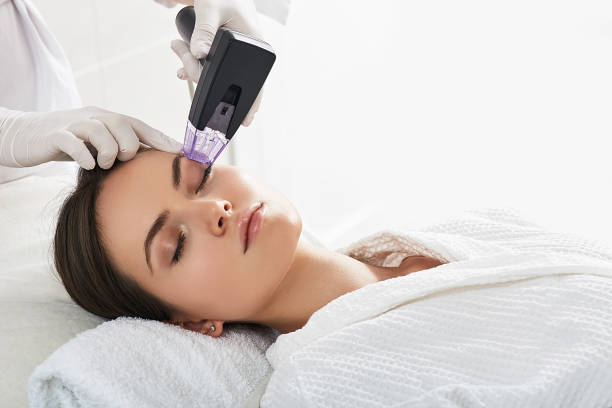
That moment when you notice in the mirror that the contours of your face aren’t as defined as they used to be—that’s what brings most of my clients to me. Radiofrequency skin treatment is a non-surgical skin rejuvenation method that tightens existing collagen by delivering controlled heat to the deeper layers of the skin and, over time, stimulates the production of new collagen. It’s not a surgical facelift; it’s an approach that uses heat to trigger the skin’s own repair mechanisms.
In this article, I’ll explain what radiofrequency is, how it affects the skin, the difference between superficial devices and needle-based systems, and who can benefit from this treatment. My goal is not to list exaggerated claims, but to provide a realistic perspective. Because clients who come in with realistic expectations leave satisfied with the results.
Highlights
- Radiofrequency skin treatment aims to tighten the skin not by cutting it, but by heating the dermis to a temperature range of 40–45°C.
- Heat contracts existing collagen fibers and stimulates fibroblasts to produce new collagen.
- Superficial RF works on the skin's surface, while fractional radiofrequency works directly on the underlying tissue using micro-needles.
- Kolajen, derinin kuru ağırlığının yaklaşık %75’ini oluşturur; radyofrekans tam da bu proteini hedefler.
- Results typically become noticeable after a course of 3 to 4 sessions, and this treatment is not a substitute for surgical facelifts.
What Is Radiofrequency and How Is It Used in Skin Treatments?
The simplest answer to the question “What is radio frequency?” is this: a type of energy in the electromagnetic spectrum that is used to generate heat. Radio frequency, ...is actually a broad spectrum of energy that we are familiar with from radio and communication technologies; in medical aesthetics, however, we utilize the portion of this energy that is converted into heat within the tissue.
The device generates a current that passes through the skin, and the resistance the tissue offers to this current generates heat. When this heat reaches the deeper layers without burning the surface, it acts as a stimulus for collagen. The mechanism is different from that of a laser; radiofrequency does not target melanin pigment.
This detail is important because, since the pigment is not targeted, the risk of discoloration remains low even on darker skin tones. This is precisely why the method can be comfortably applied year-round.
How Does Radiofrequency Affect the Skin?
Radiofrequency has a two-stage effect on the skin. The first stage is immediate contraction; collagen fibers exposed to heat shorten, and the skin becomes slightly tighter after the session. This initial tightening subsides somewhat within a few days, so it can be misleading on its own.
The second stage is the most important. Heat-stimulated fibroblasts produce new collagen and elastin over the course of several weeks. This slow regeneration process results in lasting skin rejuvenation, which typically becomes visible after the fourth week.
Our collagen production decreases by an average of %1 each year after age 25; the goal of radiofrequency is to stimulate this declining production. In other words, we do not inject a filler into the skin from the outside; rather, we stimulate the skin’s own production.
What Is the Difference Between Superficial RF and Fractional Radiofrequency?
Radiofrequency treatments are broadly divided into two groups. Superficial RF devices deliver energy through the skin’s surface without using any needles. This method is best suited for mild sagging and overall skin tone; there is virtually no recovery time.
Fractional radiofrequency, on the other hand, delivers energy directly to the dermis using very fine micro-needles. Because needle-based systems work at a deeper level, they are particularly effective for treating skin concerns such as enlarged pores, fine lines, and acne scars. The gold needle is also essentially a needle-based radiofrequency method; its basic principle is What is a gold needle I explained it in detail in my article.
The Scarlet X, which I use in my clinic, is a system that delivers fractional radiofrequency energy to the underlying tissue while protecting the skin’s surface. Which treatment option is right for you depends on your skin thickness and your treatment goals.
What Does RF Skin Tightening Target?
RF skin tightening, as the name suggests, aims to firm up sagging areas of the skin. It is most commonly used on the jawline, the double chin area, the cheeks, and the neck. In these areas, tissue that has sagged due to gravity becomes firmer when stimulated by heat.
In addition to the face, it can also be applied to other areas of the body, such as the arms, abdomen, and upper legs. It produces good results for mild to moderate sagging. If there is severe sagging, however, we must be honest: radiofrequency alone will not be sufficient in such cases.
Contact us
Create Your Appointment
What Are the Benefits of Radiofrequency?
The benefits of radiofrequency aren’t limited to skin tightening. Because increased collagen improves the skin’s texture, pores shrink, fine lines soften, and the skin generally looks more vibrant. Since it works without exfoliating the skin’s surface, there’s no peeling or lengthy recovery time.
The microchannels created by microneedling systems allow the applied treatment serums to penetrate the skin more effectively. For this reason, it can be combined with treatments such as mesotherapy or salmon DNA. The benefits of this method for the skin gold needle benefits I covered this in more detail in my article.
The restorative role of radiofrequency in treating deep acne scars will be discussed in a separate section, acne scar treatment I addressed this in my article. Distinguishing between the two topics makes it easier to choose the right method.
Who Is Radiofrequency Suitable For?
Radiofrequency is suitable for a wide range of people because there are no restrictions based on skin color. The most typical candidates are clients in their 30s and 40s who are bothered by early signs of sagging but do not yet require surgery. It can also be chosen for preventive purposes at a young age.
However, as with any procedure, there are limitations. In cases such as pregnancy, breastfeeding, an active skin infection, or the presence of a metal implant or pacemaker in the treatment area, I will either postpone the procedure or not perform it at all. That’s why we’ll be sure to discuss your medical history together before the session.
How Many Sessions Does Radiofrequency Skin Treatment Take?
Radiofrequency treatment is usually not completed in a single session. Since it takes time for the skin to produce collagen, I generally recommend a course of 3 to 4 sessions scheduled 4 weeks apart. Depending on skin thickness and the targeted area, this number may vary by one or two sessions.
A session lasts between 20 and 45 minutes, depending on the treated area. Since I use a numbing cream beforehand with needle-based systems, the procedure is comfortable for most people. To see the full results of the treatment, you need to wait a few weeks after the final session; collagen matures at its own pace.
Realistic Expectations: Radiofrequency Is Not a Facelift
The point I emphasize most here is managing expectations. Radiofrequency does not cut and tighten sagging skin like surgery does; it is a method that rejuvenates the tissue from within, rather than simply tightening the skin. It would be dishonest to promise the results of a surgical facelift for a face with a significant amount of excess skin.
A realistic goal is to firm up skin with mild to moderate sagging, tighten the tissue, and improve overall skin quality. Most of my clients say their skin looks firmer after a few sessions, but results vary from person to person. I recommend staying away from promises that claim to solve everything in a single session.
A Comparison of Superficial RF and Fractional Radiofrequency
The table below summarizes when the two main radiofrequency groups are most effective and how they work.
| Feature | Superficial RF | Fractional (Needle) RF |
|---|---|---|
| Implementation Method | From the skin's surface, without a needle | Into the dermis with microneedles |
| Featured Goal | General muscle tone, slight laxity | Pores, fine lines, acne scars |
| Depth of Effect | Superficial-moderate | Deep dermal |
| Recovery Time | Almost none | Mild redness for 1–3 days |
| Featured Device | Classic RF Head | Scarlet X Gold Needle |
At my clinic, I don’t apply a one-size-fits-all approach to radiofrequency skin treatments; I don’t set the parameters without first assessing your skin’s thickness, pore structure, and degree of sagging. While a superficial RF device may be sufficient for some skin types, for others golden needle I switch to that system and treat the underlying tissue with needle radiofrequency. Every device I use is approved by the Ministry of Health and is genuine. For a treatment plan that’s truly tailored to your skin, Communication You can message me on my page.
Frequently Asked Questions
Does the radiofrequency procedure cause pain?
With superficial RF treatments, most people feel only a warm sensation. With needle-based systems, however, the procedure is comfortable because I apply a numbing cream beforehand. A mild sensation of warmth and tingling is normal during the session.
When are the results of radiofrequency treatment visible?
A slight tightening sensation may be felt immediately after the session, but this is temporary. The actual, lasting improvement becomes noticeable after the fourth week as new collagen is produced. The full results of the treatment become apparent within a few months.
Is the effect of radiofrequency permanent?
The newly produced collagen supports the skin for a while, but since the aging process continues, the effect does not last a lifetime. To maintain the results, I generally recommend a maintenance session once a year. Sun protection also directly affects how long the results last.
On which areas is RF skin tightening performed?
It is most commonly applied to the jawline, double chin, cheeks, and neck. In addition to the face, other body areas such as the arms, abdomen, and upper legs are also suitable for treatment. The device and depth settings vary depending on the target area.
Which is better: radiofrequency or laser?
The two are designed for different purposes. Radiofrequency tightens the skin using heat and is safer for darker skin tones because it does not target pigment; lasers, on the other hand, are more effective for surface and spot-related issues. The right choice becomes clear after a skin analysis.
Is it a substitute for radiofrequency facelift surgery?

Appointment & Contact
Contact our clinic for reliable and personalized planning in medical aesthetic applications.
Write to Us
Let's Create Your Appointment Now
Related Articles
 English