


Differences between Medical Aesthetics and Professional Skin Care: Which is the Right Choice for Your Skin?
Highlights
- The main difference between the two treatments is the skin layer they target.
- The differences between them in terms of the technology used and processing power are discussed.
- The difference between cosmetics and cosmeceuticals is explained.
- It is being clarified, in terms of authority, who is authorized to perform which tasks.
Differences between Medical Aesthetics and Professional Skin Care
Many people make the mistake of equating classic skin care in a beauty salon with medical procedures in a physician's clinic. “Skin care is done there and here; why should I come to a clinic?” is a common question. But the difference is not just in location or price; the difference is in “science”, “depth” and “results”. As Dr. Melis Ülger, Istanbul, Kadikoy‘In my clinic in Istanbul, I practice medical aesthetics not only as a beautification tool, but also as a treatment discipline. In this comprehensive guide, I will explain the vital differences between spa/salon-type professional treatments and doctor-controlled medical aesthetic applications in a scientific language by going down to the layers of your skin.Beauty Salon or Doctor's Clinic? Unraveling the Confusion
First, it is necessary to clarify terminology.
- Professional Skin Care (Salon/Spa): Procedures, usually performed by aestheticians or beauticians, focused on cleansing, soothing and superficially moisturizing the skin. The main goal is “care” and “protection”.
- Medical Aesthetics (Clinic): They are medical procedures performed by medical doctors, aimed at changing the biological structure of the skin, reversing the signs of aging and removing anatomical defects. The main goal is “treatment” and “correction”.
The Most Fundamental Difference: Depth (Epidermis vs. Dermis)
The sharpest boundary between these two disciplines is which layer of the skin they reach.
Professional Care Polishing and Cleaning the Surface
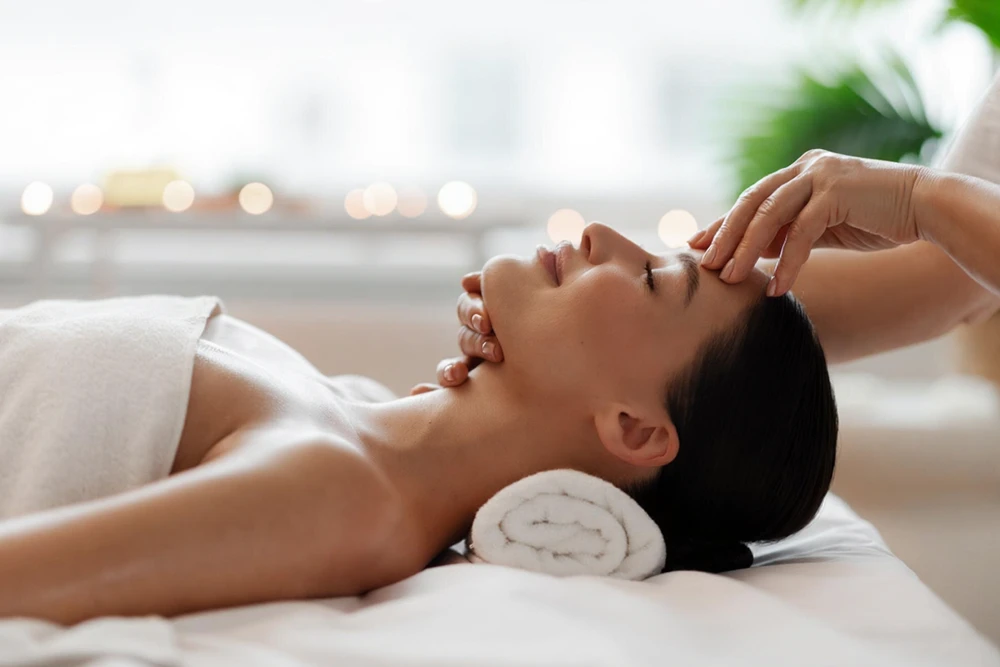
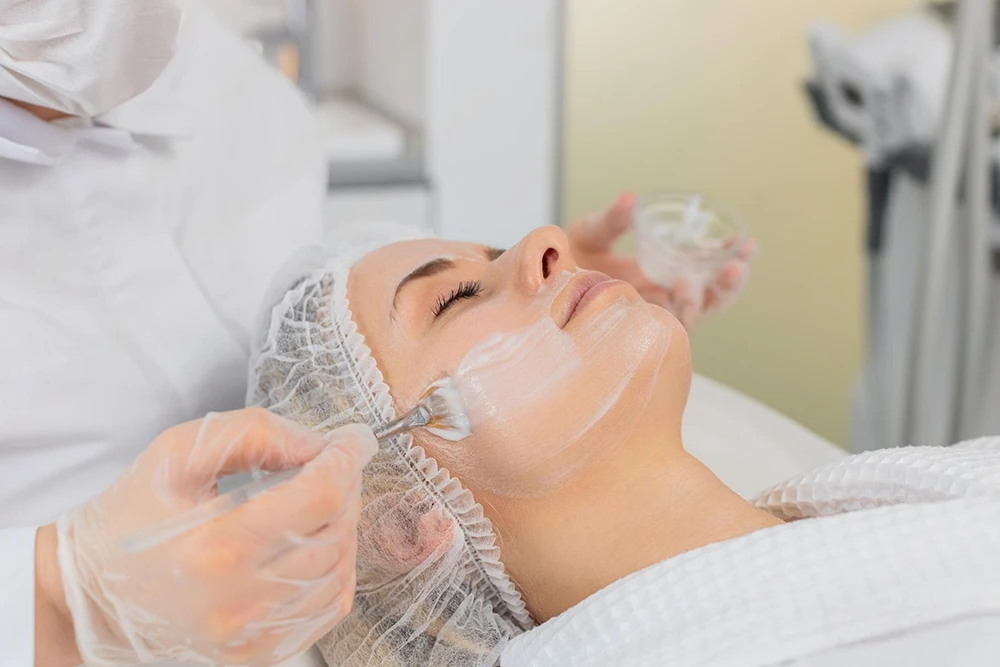
Salon treatments are legally and technically only the top layer of the skin. Epidermis (and its topmost layer, the Stratum Corneum). Steam is applied, dead skin is removed, a mask is applied. These procedures give the skin a temporary glow, open the pores and slightly increase blood circulation. However, it does not go down to the “living” part of the skin.
Medical Aesthetics: Repairing and Replacing Deep Structure
Medical aesthetics, on the other hand, bypasses the epidermis and goes to the actual production center of the skin. Dermis layer, even down to muscle and bone tissue. Collagen and elastin fibers, hyaluronic acid reserves, capillaries and pigment cells are here. Golden Needle or laser devices to the dermis to create “controlled damage” and force the skin to repair itself. You cannot produce collagen by applying a cream, but you can achieve this with a stimulus to the dermis.
Technology and Equipment Power
You can see machines in both places, but their engine power and mechanisms of action are very different.
Steam and Vacuum vs. Laser and Radiofrequency
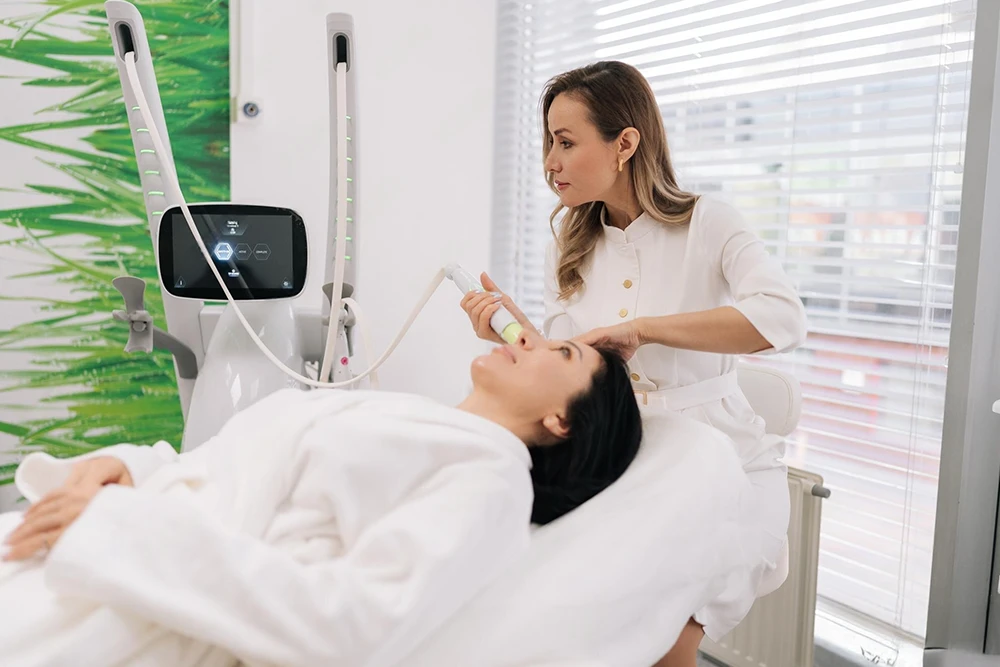
The devices used in salons are usually steam machines, low-power LED masks or superficial vacuum devices. In medical clinics, high-energy Lasers (Nd:YAG, Thulium), Focused Ultrasound (HIFU) and Fractional Radiofrequency devices. For example, a spot treatment in a salon only slightly lightens the color of the spot, whereas in a clinic Baby Face Ultra (Thulium Laser) It destroys the pigment (melanin) that forms the stain by breaking it down.
FDA Approval and Medical Device Classification
Devices used in clinics have the status of “Medical Device” and require FDA (US Food and Drug Administration) approval. Only physicians are legally authorized to use these devices. Salon devices are classified as “Cosmetic Devices” and their power is limited.
Let's Create Your Appointment Now
Leave your name and phone number and we will call you to discuss the right treatment and an appointment time.
Reach us by phone+90 532 336 52 00Content and Product Potential: Cosmetics or Cosmeceuticals?
The content of the creams and serums applied is also a determining factor.
Over-the-Counter (OTC) Products and Limited Absorption
The products used in salons are classified as “Cosmetics”. For safety reasons, the proportion of active substances (Retinol, Acids, etc.) is low. Their molecular structure is large, so they cannot pass under the skin, they remain on the surface.
Medical Agents: The Power to Change Cell Function
In clinics, “cosmeceuticals” or medicinal drugs are used. For example, Mesotherapy cocktails deliver pure hyaluronic acid, salmon DNA or vitamins directly under the skin with a needle. There is no absorption problem; 100% bioavailability is achieved. In addition, strong acids such as 70% chemical peels can only be applied under a doctor's supervision.
Who Can Apply? Areas of Expertise and Competence
Practitioner training is the most critical factor for the safety and success of the process.
Aestheticians' Limits: Relaxation and Care
Aestheticians are valuable experts trained in skin anatomy and care. However, they are not authorized to perform procedures that will disrupt the integrity of the skin (needle, bloody, burning). Their field is to protect and clean the skin.
Competence of Physicians: Injection and Tissue Intervention
Medical doctors are trained in anatomy, physiology and pharmacology. Botox, Only physicians are authorized to use injectable procedures such as fillers, fillers, thread suspension or risky devices such as lasers. If a complication (side effect) develops, it is also the physician who can treat it.
Which Method to Choose for Which Problem?
You should determine your route according to your needs.
Wrinkles and Volume Loss: Botox and Fillers Essential
If your problem is expression lines (crow's feet, forehead) or facial sagging, no cream or salon treatment can fix it. Botox to relax the muscles, Botox to volumize Dermal Fillers is essential. This is strictly a medical procedure.
Blemishes and Acne Scarring: The Dominance of Lasers
Superficial sunspots can be lightened with light peels, but for deep (dermal) spots and pitted acne scars, the skin needs to be peeled and restructured. This is only possible with lasers or Golden Needle.
Routine Cleansing and Moisturizing: Hydrafacial and Medical Treatments
Salons may be preferred for routine skin cleansing. However Hydrafacial Advanced treatments like these yield much more effective results when performed in a clinical setting following medical protocols (using stronger acids and boosters). We call this “Medical Skin Care”we say.".
Permanence of Results and Treatment Processes
The effect of salon treatments usually lasts for a few days; it is called the “Cinderella Effect” (Prom Effect). It's great for glowing before an important event. The effect of medical aesthetic procedures lasts for months or even years. Because medical procedures trigger the collagen production of the skin. The return on investment is long term.
Safety and Complication Management
Every procedure has a risk. A wrong procedure (burn, infection) performed in the hall can leave permanent scars. Sterilization standards in clinics are at the operating room level. About the safety of medical procedures American Academy of Dermatology (AAD), recommends that procedures should be performed under the supervision of board-certified physicians.
Scientific and Holistic Approach at our Clinic in Kadikoy
Kadikoy‘At our clinic in Istanbul, we do not see medical aesthetics as just needle procedures. We offer a “holistic” treatment plan by combining care technologies such as Hydrafacial with lasers and injections. We both smooth the surface of your skin and repair its deeper architecture. We welcome you to our clinic to entrust your beauty to the power of science, not to chance or temporary solutions.
Frequently Asked Questions
How do the purposes of the two applications differ?
The primary purpose of professional salon or spa treatments is "care" and "protection." The primary purpose of medical aesthetics, on the other hand, is "treatment" and "correction.".
Where is the sharpest boundary?
Which layer of the skin is reached? Salon treatments are legally and technically limited to the epidermis, which is the outermost layer of the skin.
What is involved in salon maintenance?
Steam is applied, dead skin cells are removed, and a mask is applied. These steps give the skin a temporary glow.
Who implements the program?
Professional skin care is typically provided by estheticians or beauty specialists, while medical aesthetics is performed by medical doctors.
Sources

You may also like
-

Winter Skin Dryness: Why It Gets Worse and How to Repair It at Home
Why does skin get drier in winter, and how can you repair the skin barrier at home? Dr. Melis Ülger explains lukewarm water, ceramide creams and when to see a dermatologist. -

Why Do Sunspots Fade More Easily in Winter?
Why is spot treatment scheduled for the fall and winter? Dr. Melis Ülger explains the role of sun exposure in the process. -

Post-Summer Skin Care: Why Are September and October the Right Time?
When and in what order should you perform post-summer skincare? Learn the right methods and schedule for addressing dark spots, dryness, and skin texture, and let’s create your plan together.
 Türkçe
 English