














Who is IV Therapy Suitable for?
09/10/2025
How to Avoid Duck Lip Appearance After Lip Augmentation?
13/10/2025Botox Use in Migraine Treatment
Migraine is a neurological disease that goes far beyond a simple headache and deeply affects the quality of life, work and social life of the person, with symptoms such as throbbing pain, nausea, sensitivity to light and sound. If you suffer from headaches more than 15 days a month and at least 8 of these headaches are migraine-like, you may be suffering from 'chronic migraine".

Botox Use in Migraine Treatment
Many patients struggling with this challenging condition are tired of living a life dependent on pain medication or living with the worry of when the attacks will come. At this point, we are usually known for aesthetic applications. Botox, As an FDA (US Food and Drug Administration) approved medical treatment, it offers an effective and modern ray of hope for chronic migraine patients. As Dr. Melis Ülger, Istanbul, Kadikoy‘I would like to explain this important therapeutic role of Botox and how it can improve your quality of life in the light of scientific data.
Migraine is Not Just a Headache: Understanding Chronic Migraine
Although often confused, not all headaches are migraines and not all migraines are “chronic”. According to the criteria of the International Headache Society, in order for a patient to be diagnosed with chronic migraine, he/she must experience headaches for 15 days or more per month for the last 3 months and have migraine features (unilateral, throbbing, nausea, light/sound sensitivity, etc.) on at least 8 of these painful days. This means spending half or more of the month in pain, which clearly has a devastating impact on a person's life. Chronic migraine is not just a symptom, but a serious neurological disease that needs to be treated.

How Botox Was Discovered to Treat Migraines From Accidental Discovery to Approved Treatment
The role of Botox in migraine treatment was discovered by an interesting coincidence. In the 1990s, patients who received Botox for facial wrinkles began to report to their doctors that their headaches and migraine attacks were reduced after the procedure. These observations attracted the attention of the scientific world and led to the start of extensive clinical research on the subject. The PREEMPT (Phase 3 Research Evaluating Migraine Prophylaxis Therapy) study, the largest and most important of these studies, proved that Botox significantly reduced the frequency and severity of chronic migraine attacks. Following these successful results, in 2010 the FDA officially approved the use of Botox in the prophylactic treatment of chronic migraine.
Mechanism of Action of Botox: Blocking Pain Signals
The mechanism by which Botox removes wrinkles is based on muscle relaxation. However, the mechanism of action in the treatment of chronic migraine is thought to be more complex than this. Botox not only relaxes the muscles, but also acts on the nerve endings in the area where it is injected. It is thought to inhibit the release of chemical neurotransmitters such as CGRP (Calcitonin Gene Related Peptide) and Substance P, which play a role in transmitting pain to the brain. In other words, Botox blocks pain signals at the nerve endings before they reach the brain. This does not make it a painkiller (relieving pain during an attack); it makes it a “pain inhibitor” (preventing the attack from ever starting). The aim of treatment is not to cure attacks, but to reduce the frequency and severity of attacks and increase the number of pain-free days.
Who is a Suitable Candidate for Chronic Migraine Botox?
This point is very important: Botox is not a treatment for every headache or every migraine. It is a treatment approved only for patients over the age of 18 who have been diagnosed with “Chronic Migraine” by a Neurologist. Generally, it is a strong option for patients who have tried other prophylactic medication treatments but have not received adequate response or cannot use these medications due to side effects.

Treatment Protocol: PREEMPT Protocol and Implementation
Chronic migraine botox application is completely different from botox application for aesthetic purposes and is performed according to an internationally accepted protocol standardized by PREEMPT studies.
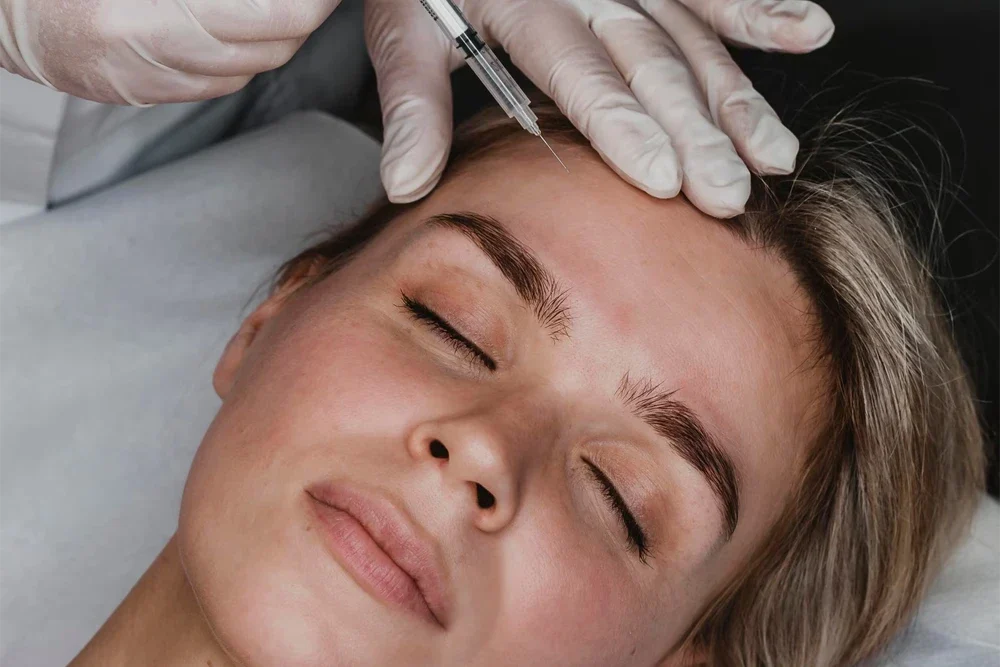
Injection Points 31-39 Address Points
According to this protocol, Botox injections are given to 31-39 predetermined points belonging to 7 main muscle groups. These are the areas with the nerve endings where migraine pain is most commonly felt and include: forehead, temples, back of the head (occipital region), neck and upper shoulders (trapezius muscles). Injections in so many locations aim to block pain signals over a large area.
Session Frequency and Expectations
Treatment is scheduled in repeated sessions every 12 weeks (3 months). Although a significant proportion of patients begin to benefit after the first session, it is usually necessary to wait until the second or third session to evaluate the full effectiveness of the treatment. At each session, a reduction in pain frequency and intensity is monitored. About the global impact of headache, Institutions such as the World Health Organization (WHO) also emphasizes the profound impact of this condition on quality of life, and Botox treatment can play an important role in restoring this quality.
Write to Us
Let's Create Your Appointment Now
Advantages and Possible Side Effects of Treatment
The biggest advantage is that it eliminates the need to take medication every day and significantly improves the patient's quality of life. Possible side effects are usually mild, temporary and limited to the injection sites. The most common side effect is temporary neck pain or stiffness as the neck muscles are also injected. Side effects such as drooping eyebrows, which can be seen in Botox for aesthetic purposes, are much rarer in this medical protocol.
Our Approach to Chronic Migraine Treatment at our Clinic in Kadikoy
Kadikoy‘In our clinic in Istanbul, Turkey, we perform chronic migraine Botox with great sensitivity and seriousness, only for the appropriate patient profile and strictly adhering to the standardized PREEMPT protocol. Our goal is not just to perform a procedure, but to give you your life back by reducing your days of chronic pain. The process begins with a detailed evaluation in collaboration with your neurologist or in our clinic.

 English