












What is the Difference Between Botox and Fillers?
What is the Difference Between Botox and Fillers?
Medical aesthetic applications have a big place today in combating the signs of aging on the face. The two most frequently heard and confused concepts among these applications are botox and dermal fillers. Although both are used to reduce wrinkles and rejuvenate, their mechanisms of action, goals and application areas are quite different from each other.
What is the Difference Between Botox and Fillers?
Understanding these differences is critical for choosing the right treatment and creating realistic expectations. So, what is the main difference between Botox and fillers, when should one be preferred and what kind of effect should we expect? In this article, we will discuss the details of these two popular aesthetic applications with a scientific approach.
1. Signs of Facial Aging and Aesthetic Solutions
The aging process leads to a series of changes in the skin and structural tissues of the face. These changes lead to the appearance of different types of wrinkles and volume loss.
Dynamic (Mimic) Wrinkles and Static Wrinkles:
- Dynamic Wrinkles: They are the lines formed by the continuous contraction of the facial muscles (mimic movements such as laughing, frowning, being surprised). Initially, they only become apparent when mimicking, but over time they can become permanent and turn into deep static wrinkles. Forehead lines, lines between the eyebrows (glabella) and crow's feet around the eyes are the most typical examples of dynamic wrinkles.
- Static Wrinkles These are the lines and folds that appear due to the skin's loss of collagen and elastin with age, deterioration of moisture balance and the effect of gravity, which are evident even without facial expression. Nasolabial grooves (lines descending from the edge of the nose to the corner of the lips), marionette lines (lines descending from the corner of the lips to the chin) and wrinkles on the cheeks due to sagging are examples of static wrinkles.
Volume Loss and Skin Sagging:
With aging, the fat tissue, bone and muscle structure in the face becomes thinner and displaced. This leads to volume losses such as collapse in the cheeks, thinning in the temples, thinning in the lips and loosening in the jaw line. With the effect of gravity, the skin sags downwards, causing a tired and aged expression.
Basic Approaches of Medical Aesthetics:
Medical aesthetics aims to combat these signs of aging with non-surgical methods. Basically, there are two main approaches: muscle relaxants (Botox) that target dynamic wrinkles and fillers that reduce static wrinkles and sagging by replacing volume loss.
2. What is Botox and How Does It Work?
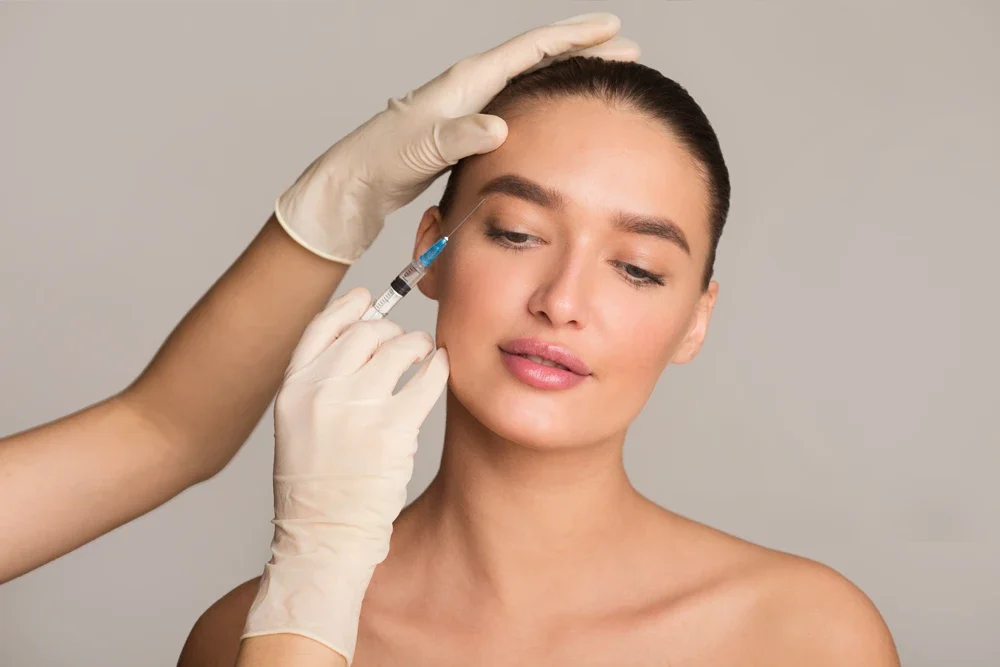
Botox is botulinum toxin, a purified protein derived from the bacterium Clostridium botulinum and used for aesthetic and medical purposes.
Definition and Scientific Mechanism of Botulinum Toxin:
Botulinum toxin temporarily blocks the release of a neurotransmitter called acetylcholine, which transmits the contraction signal from the nerve endings to the muscles. Thanks to this blocking effect, excessive contraction of the injected muscle is prevented or the force of contraction is reduced. When the muscle relaxes, the skin over it is smoothed and wrinkles caused by mimic movements are visibly reduced.
Application Areas of Botox (Mimic Wrinkles, Sweating, Migraine):
Botox is most commonly used to treat dynamic wrinkles on the face:
- Forehead Lines Horizontal lines caused by brow lifting movements.
- Lines Between the Eyebrows (Glabella): Vertical lines during frowning.
- Goose Feet Lines around the eyes caused by laughing or squinting. Apart from aesthetics, it is also used effectively in the medical field in the treatment of excessive sweating (hyperhidrosis), chronic migraine, tooth clenching (bruxism) and some muscle spasms.
Botox Results and Duration of Effect:
The effect does not start immediately after Botox injection. The first effects are usually seen within 2-3 days and full results appear within 10-14 days. The effect of Botox is temporary and usually lasts 4 to 6 months, depending on the person's metabolic rate, the dose administered and lifestyle. When the effect fades, wrinkles gradually return and can be reapplied if desired.
3. What is Dermal Filler and How Does It Work?
Dermal fillers are gel-like substances used to add volume to the skin, fill wrinkles and shape facial contours. The most commonly used filler is hyaluronic acid.
Definition of Hyaluronic Acid and Other Fillers:
Hyaluronic acid (HA) is a substance found naturally in our skin with a very high water retention capacity. It provides fullness, moisture and elasticity to the skin. Hyaluronic acid fillers used in medical aesthetics are gels synthesized in a laboratory environment, biocompatible and generally obtained from non-animal sources. Apart from HA, there are also fillers with different ingredients such as calcium hydroxyapatite, polylactic acid, but HA fillers are the most popular and are considered safer due to their temporary nature.
Mechanism of Action of Fillers (Volumizing, Moisturizing):
The filler adds volume to the area where it is injected. This volume replaces the tissue lost due to aging, fills wrinkles and removes depressions in the skin. Hyaluronic acid, thanks to its ability to absorb water up to a thousand times its own weight, also creates a moisturizing effect in the area where it is injected and makes the skin look fuller, taut and vibrant.
Application Areas of Fillers (Wrinkles, Volume Loss, Contouring):
Fillers have a wide range of applications:
- Static Wrinkles Nasolabial grooves (lines descending from the edge of the nose to the corner of the lips), marionette lines (lines descending from the corner of the lips to the chin).
- Volume Loss Loss of volume in the cheeks, sunken temples, hollowness under the eyes (light filling).
- Lip Plumping and Shaping: Plumping thin lips, defining the lip contour.
- Face Contouring Jaw line clarification, emphasizing cheekbones, nose shaping (non-surgical rhinoplasty).
Results and Duration of Effect of Fillers:
The results of filler injections are usually immediate. Skin depressions are filled, wrinkles are lightened and the desired volume is achieved. The duration of action of fillers varies depending on the type of filler used (molecular weight, cross-linking rate), the area where it is injected, the metabolism and lifestyle of the person. Hyaluronic acid fillers usually last between 9 and 18 months.
4. Key Differences Between Botox and Fillers
Understanding the main differences between Botox and fillers is vital to create the right personalized treatment plan.
Difference in Mechanism of Action (Muscle Relaxation vs. Bulking):
- Botox By temporarily preventing the muscles from contracting, it reduces the mimic wrinkles caused by these muscles. It is a mechanism based on muscle relaxation.
- Filling: By adding volume under the skin or in specific areas, it fills hollows, smooths wrinkles and sculpts facial contours. It is a physical plumping mechanism.
Targeted Wrinkle Type (Dynamic vs. Static):
- Botox It is especially ideal for dynamic wrinkles caused by mimic movements (forehead, between the eyebrows, crow's feet).
- Filling: It is used for static wrinkles (nasolabial furrows, marionette lines) and depressions due to volume loss that appear even without facial expression.
Intended Use and Application Areas:
- Botox It is used for purposes such as removing mimic wrinkles, eyebrow lifting, sweating, migraine, teeth clenching treatment. It is usually applied to the upper part of the face.
- Filling: It is used for purposes such as volume loss, shaping facial contours, lip augmentation, chin and cheek definition. It can be used on the lower and middle part of the face, lips, under the eyes and other parts of the body.
Persistence Periods:
- Botox Effective for an average of 4-6 months.
- Filling: Hyaluronic acid fillers are effective for an average of 9-18 months (depending on the product type).
Raw Materials and Components:
- Botox It is a purified protein (botulinum toxin) derived from the bacterium Clostridium botulinum.
- Filling: The most commonly used ones are based on hyaluronic acid. Other types of fillers may also contain different substances.
5. When Should Botox and When Should Fillers Be Preferred?
Choosing the right treatment depends on the person's aesthetic goals, the type of signs of aging and the overall skin structure.
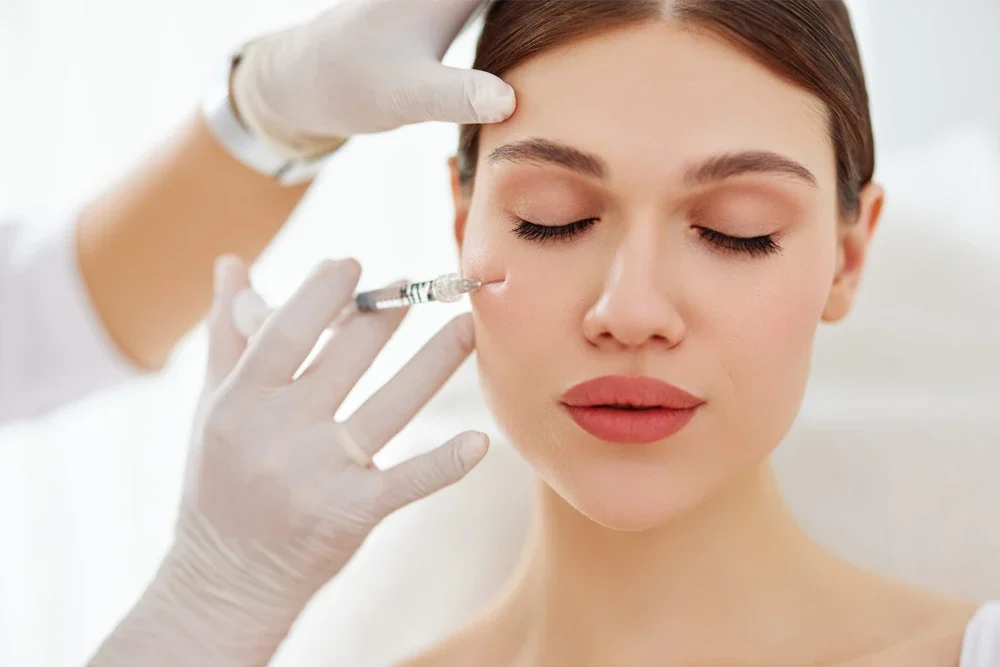
The Importance of Choosing the Right Treatment:
- If your main complaint is forehead lines, lines between the eyebrows and crow's feet that occur during mimicry or have become permanent over time Botox might be a more viable option.
- If your face has volume loss, depressions, deep static wrinkles or thinning lips dermal fillers should be preferred. Special light fillers are also used for under-eye bruises and hollows.
- A specialist physician will perform a detailed facial analysis and determine which application or applications are more suitable for you.
Combined Treatment Approaches and Holistic Aesthetics:
Generally, the most natural and effective rejuvenation results are achieved by using Botox and fillers together. For example, Botox can be used for wrinkles on the forehead and around the eyes, while fillers can be used to eliminate nasolabial grooves and volume loss in the cheeks. This “holistic aesthetic” approach provides a more balanced and harmonious rejuvenation by targeting the signs of aging in different parts of the face at the same time.
The Role of Expert Physician Assessment:
Botox and filler applications should be performed by a dermatologist or plastic surgeon experienced in medical aesthetics. The physician's knowledge of facial anatomy, aesthetic perspective and correct product selection are vital to achieve natural and safe results. Incorrect dosage or incorrect application techniques can lead to undesirable results.
Write to Us
Let's Create Your Appointment Now
Frequently Asked Questions About Botox and Fillers
You can find the most curious questions and answers about the differences between Botox and fillers below:
Frequently Asked Questions (FAQ)
Yes, in most cases, Botox and fillers can be combined in the same session or in different sessions. This offers simultaneous solutions to signs of aging in different parts of the face.
Although prices vary according to the brand and quantity of the product used and the area of application, generally the cost of fillers can be higher than botox. However, this depends on the amount of units/ml to be applied.
After both botox and filler applications, you can usually return to daily activities immediately. Slight redness, swelling or bruising may occur, but these are usually temporary.
Yes, an extremely natural and rested appearance can be achieved with both botox and fillers when applied by an experienced specialist physician with personalized dosage and techniques. The goal is to rejuvenate without losing your expression.
In both applications, mild side effects such as temporary redness, swelling and bruising may occur at the injection site. Rarely, more serious side effects may also occur. The important thing is to have the application performed by an authorized and experienced physician.

Contact Now for a Holistic Approach to Your Health
As Dr. Melis Ülger Clinic, we are at your side to make a special evaluation about botox and dermal filler applications and to offer you the most suitable solution for the signs of aging on your face. To achieve a youthful and natural appearance you can make an appointment by contacting usyou can find answers to all your questions.
 English